Please Choose Your Language
Views: 0 Author: Site Editor Publish Time: 2026-10-12 Origin: Site
Retail fixture selection directly impacts sales per square foot. Poor merchandising hardware creates dead zones on the shop floor. Obstructed sightlines hide profitable merchandise, and inefficient layouts frustrate shoppers. Store managers and retail architects constantly balance high-density inventory storage against product visibility. You must choose between freestanding promotional units and structural shelving without cluttering the floor plan. Understanding the technical and functional distinctions between a display stand and a display rack solves this spatial problem. This decision revolves around load-bearing capacity, footprint optimization, installation requirements, and shopper psychology. Selecting the correct hardware transforms chaotic aisles into streamlined, high-converting retail environments. We will break down the exact specifications, material limits, and floor planning strategies you need to maximize your retail footprint.
Primary Functionality: Display stands are optimized for product isolation, impulse buys, and promotional visibility, whereas display racks are engineered for high-volume inventory management and category organization.
Material and Load Trade-offs: Heavy-duty applications require specific material choices; a tiered metal display rack offers superior load-bearing capacity and sustainability compared to mixed-material or disposable stands.
Spatial Efficiency: Rotating and multi-sided fixtures maximize vertical space in tight footprints, but require strict adherence to aisle clearance and ADA compliance regulations.
Strategic Deployment: The most profitable retail environments utilize a hybrid approach, anchoring aisles with racks and driving endcap, in-aisle, or point-of-sale conversions with stands.
A stand is defined by its footprint and mobility. These fixtures are typically freestanding, lightweight, and highly adaptable. Engineers design them for portability, seasonal rotation, or pop-up retail environments where flexibility is paramount. The primary focus remains visual merchandising rather than bulk storage. They isolate specific products to capture immediate shopper attention. Retailers use them to highlight premium items, launch new product lines, or drive point-of-sale impulse buys near checkout registers. Common form factors include pedestals, sign-holders with minimal shelving, exhibition literature stands, and promotional shippers. Their structural geometry prioritizes aesthetics, brand messaging, and immediate visual impact over high-capacity inventory holding. You can easily reposition these units across the floor to test different merchandising zones. Most feature locking polyurethane casters or lightweight glide pads, allowing a single employee to move them without requiring pallet jacks or heavy lifting equipment. The base dimensions rarely exceed 24 by 24 inches, allowing them to slide into awkward architectural gaps or sit flush against structural columns.
Racks are defined by capacity, scale, and structural rigidity. Manufacturers build them for structural integrity and high-density stocking. They serve as long-term, semi-permanent placements on the sales floor. The core focus is comprehensive inventory management and planogram execution. A rack holds multiple SKUs, varying sizes, and deep product variants within a specific retail category. Common form factors include heavy-duty gondolas, wire grid racks, and industrial shelving units. These fixtures form the architectural backbone of store aisles. They handle heavy loads and often require rigid anchoring systems to walls or concrete floors to maintain safety under maximum weight capacity. Unlike stands, racks dictate the primary traffic flow of the store. They establish the main corridors that shoppers navigate daily. A standard gondola rack features a heavy steel base deck, vertical slotted uprights, and cantilevered shelves capable of holding hundreds of pounds. Moving a fully loaded rack requires dismantling the merchandise, removing the shelves, and often using specialized gondola skates.
Technical Attribute | Display Stand | Display Rack |
|---|---|---|
Primary Objective | Product isolation, visual impact, and impulse conversions | High-density inventory storage and category organization |
Mobility & Placement | High mobility; easily repositioned for seasonal changes | Low mobility; semi-permanent installation forming aisles |
Load Capacity | Light to medium (10 to 50 lbs per tier) | Heavy-duty (150 to 500+ lbs per shelf) |
Structural Footprint | Minimal; designed to fit tight spaces and endcaps | Large; requires significant floor space and anchoring |
Assembly Requirements | Often pre-assembled or tool-less snap-fit construction | Requires tools, leveling shims, and floor anchoring |
Fixture dimensions directly dictate store navigation and overall customer comfort. High-capacity racks often reach taller heights to maximize vertical storage space. Supermarket gondolas utilize this verticality efficiently but can obstruct cross-store sightlines, making the space feel enclosed. Boutique environments keep fixtures lower to maintain open visual fields, enhance natural lighting distribution, and improve security monitoring. You must calculate the sales-per-square-foot potential by comparing the fixture's base dimensions against its vertical stocking capacity. Efficient traffic flow requires balancing tall perimeter racks with shorter central fixtures. Narrow aisles created by oversized racks induce claustrophobia, driving shoppers away from high-margin zones. Proper spatial planning ensures fixtures guide foot traffic naturally toward promotional areas without causing bottlenecks during peak hours. Always measure the exact footprint, including the overhang of cantilevered shelves, to ensure you maintain adequate walking space.
Fixture engineering must match product density precisely. Apparel requires entirely different structural support than heavy hardware, automotive parts, or canned goods. Analyze load-bearing limits rigorously before specifying any hardware. Exceeding these limits causes structural failure, bowing shelves, or severe tipping hazards over time. Steel gauge, weld quality, and base width determine the maximum safe load. Heavy merchandise demands 14-gauge reinforced uprights, gusseted brackets, and thicker shelving materials. Lightweight items can utilize wire grids or thin acrylic without risking structural integrity. Always align the physical properties of your merchandise with the mechanical specifications of the fixture. A shelf deflecting under the weight of heavy liquid detergent bottles looks unprofessional and creates a massive liability.
Assembly requirements significantly impact rollout schedules and operational downtime. Heavy-duty racks usually ship flat-packed to reduce freight volume. They demand substantial installation time, specialized tools, and often require professional assembly crews to ensure level placement and secure anchoring. Conversely, a freestanding unit often arrives pre-assembled or features intuitive, tool-less setup mechanisms. Quick deployment minimizes floor disruption during operating hours. Evaluate the labor hours required to assemble, level, and anchor complex shelving runs against the plug-and-play nature of standalone fixtures.
To properly install a heavy-duty commercial rack system, installation crews typically follow these steps:
Snap chalk lines on the concrete floor to map out the exact aisle dimensions and ensure perfectly straight runs.
Position the base shoes and vertical uprights, using laser levels to check for plumb alignment.
Insert the base decks and kickplates to stabilize the bottom frame.
Install the back panels, whether solid steel, pegboard, or slatwall, locking the uprights into a rigid structure.
Insert the cantilever brackets at the desired pitch angles and lay down the steel shelves.
Drive concrete anchors through the base shoes if the rack exceeds specific height-to-depth safety ratios.
Material selection drives fixture longevity and environmental impact. Assess sustainability efforts regarding material degradation in high-traffic commercial environments. A solid metal display stand resists impact damage from shopping carts, floor buffers, and constant customer interaction. It offers superior recyclability at the end of its lifecycle, aligning with modern environmental standards. Cheaper, single-use corrugated or lightweight plastic alternatives degrade rapidly under retail conditions. Frequent replacements generate excess waste and disrupt merchandising consistency. Invest in durable metals, heavy-duty casters, and powder-coated finishes to extend operational lifespan. Powder coating resists chipping and scratching far better than standard liquid paint. It maintains a professional aesthetic through years of heavy use, preventing rust in humid environments or outdoor garden centers.
Checkout zones represent prime real estate for low-friction, high-margin purchases. Deploy stands near these areas to capture immediate shopper attention while they wait in line. Minimal-footprint designs integrate seamlessly into existing queue lines and high-traffic endcaps without blocking pathways. These units hold small, easily grabbable items like batteries, cosmetics, or confections. The physical isolation of the product removes visual competition from surrounding merchandise. Shoppers make faster purchasing decisions when presented with curated, standalone options right before checkout. By utilizing vertical space in these cramped zones, you maximize revenue potential in areas that cannot accommodate traditional shelving. Dump bins and clip strips attached to standalone poles work exceptionally well for loose, irregularly shaped impulse items.
Isolation techniques elevate the perceived value of luxury or limited-edition items. A dedicated fixture signals importance and exclusivity to the consumer. Modular stands facilitate rapid seasonal changeovers, trade shows, or pop-up shops without disrupting core store layouts. You can swap out promotional graphics, adjust shelving heights, and reposition the unit overnight. This flexibility allows retail spaces to feel dynamic and responsive to current trends without requiring a complete floor plan overhaul. When launching a new product line, a standalone unit prevents the new items from getting lost within the standard inventory aisles. It ensures maximum visibility during the critical launch window. You can position these units directly in the primary sightline of the store entrance to act as a visual speed bump, slowing down shoppers and forcing them to engage with the featured merchandise.
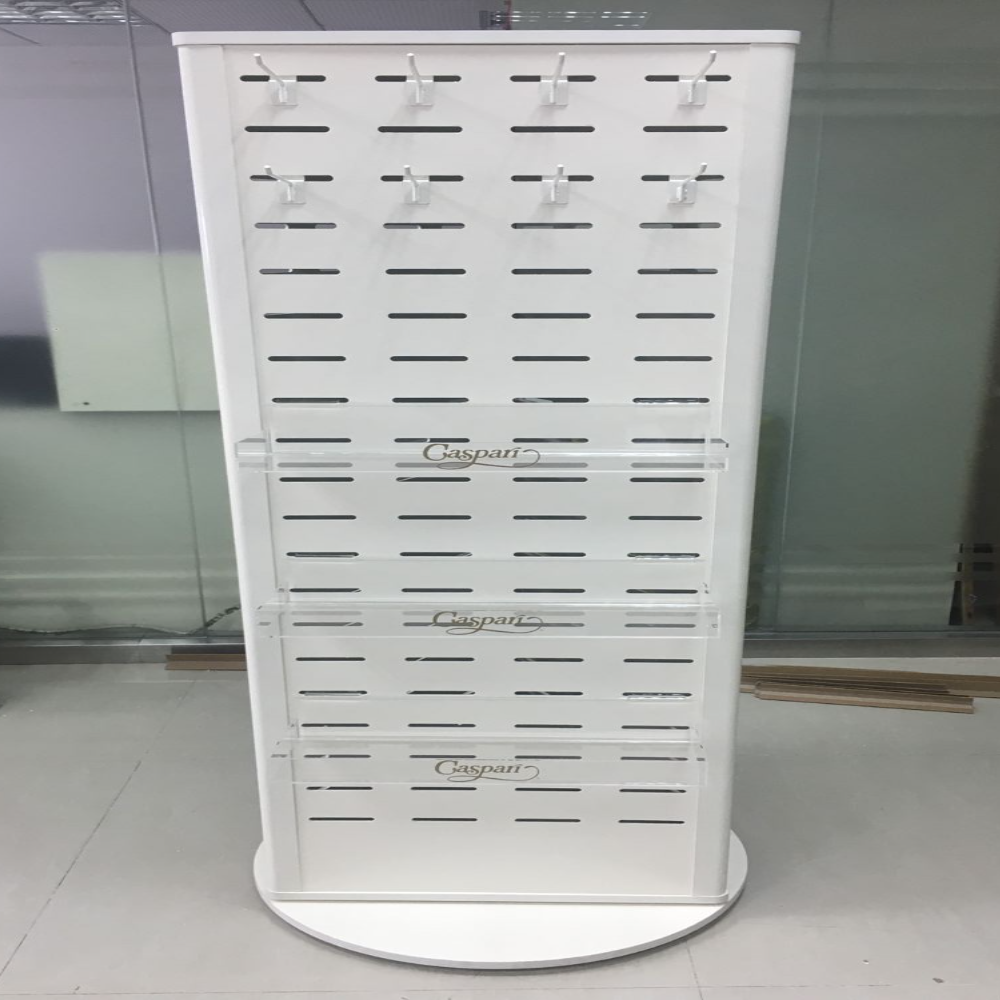
Integrating a slatwall rotating display stand offers true 360-degree product visibility. This format supports high SKU counts in a minimal footprint, making it ideal for accessories, phone cases, or small packaged goods. Evaluate the mechanical trade-offs carefully before deployment. Rotating mechanisms increase customer engagement through interactive browsing, encouraging shoppers to view the entire product range from a single stationary position. However, bearings experience significant wear and tear over time. Specify high-grade steel ball bearings and a wide, weighted base to ensure smooth rotation. A cheap bearing assembly will grind, squeak, or jam under the weight of fully loaded slatwall hooks. The base must be heavy enough to prevent the unit from tipping over when a customer pulls a tightly secured item off a peg hook.
Bulk merchandising requires robust structural support and deep storage capacity. Aisles structured with heavy-duty racks facilitate customer self-service and maintain high stock levels directly on the floor. Deep shelving reduces restocking frequency during peak operational hours. Store staff spend less time running to the backroom to replenish products and more time assisting customers. The rigid framework of a rack system handles the continuous physical interaction of shoppers pulling items, leaning on shelves, and moving merchandise. For high-turnover goods like groceries or hardware, racks provide the necessary volume to prevent empty shelves. Empty shelves directly harm sales and brand perception. A well-stocked rack communicates abundance and reliability to the consumer.
Complex product lines demand clear visual hierarchies to prevent shopper confusion. Deploying a tiered metal display rack organizes footwear, hardware, or packaged foods logically. Tiers allow shoppers to scan multiple product variations, sizes, and colors simultaneously without crouching or stretching. Adjustable shelving accommodates shifting packaging sizes seamlessly. When manufacturers update product dimensions, you simply reposition the shelf brackets along the vertical uprights. This adaptability ensures the rack remains functional across multiple product life cycles. You can set the lower shelves at a flat angle for heavy boxes and pitch the upper shelves downward at a 15-degree angle to improve visibility for smaller items. This mechanical flexibility maintains organized, easily navigable categories that enhance the overall shopping experience.
Retailers often blend materials to achieve specific visual goals without sacrificing structural integrity. Implementing a rotating display rack with acrylic shelves combines the high capacity of a traditional rack with a premium aesthetic. Clear acrylic provides excellent light transmission, illuminating products from all angles and eliminating dark shadows common in deep metal shelving. Assess the maintenance requirements strictly before deployment. Acrylic lacks the scratch resistance of tempered glass or powder-coated steel. High-touch environments require strict cleaning protocols using specialized non-abrasive solutions and microfiber cloths. Wiping acrylic with standard paper towels and glass cleaner will cause micro-scratches, eventually creating a dull, cloudy appearance that ruins the premium aesthetic.
Over-deploying fixtures leads directly to aisle paralysis. Shoppers feel overwhelmed by visual clutter and physical congestion, causing them to navigate away from profitable zones. This degrades the customer experience and hurts conversion rates. Implement strict fixture-to-white-space ratios based on total store square footage. Strategic placement matters immensely. Keep bulky, high-capacity racks on the perimeter or in dedicated central aisles. Use smaller stands to break up long sightlines without blocking navigation paths. A well-designed layout guides the eye naturally, using negative space to emphasize featured products rather than burying them in a sea of metal. Provide ample decompression zones near the store entrance where shoppers can adjust to the lighting and layout before encountering dense product displays.
Selecting rigid, non-adjustable racks limits future merchandising strategies. Fixed-welded shelves cannot adapt to new product dimensions or shifting seasonal inventory. Complex systems might require expensive professional installation for every minor layout change, draining operational resources. Prioritize modular systems like slatwall, gridwall, or slotted uprights. These accept universal hardware, hooks, faceouts, and baskets. In-house staff can reconfigure modular fixtures quickly, reducing reliance on external contractors for store updates. Modularity future-proofs your floor plan, allowing the physical space to evolve alongside consumer trends and inventory shifts. Standardizing your slotting pitch ensures you can source replacement parts or new accessories from multiple vendors without compatibility issues.
Freestanding units risk encroaching on mandated aisle widths if placed carelessly. Tall, narrow fixtures create severe tipping hazards if improperly loaded with top-heavy merchandise. Anchor heavy racks directly to walls or concrete floors using industrial fasteners. Ensure base weighting for tall stands to lower the center of gravity and prevent accidental knock-overs by shopping carts. Audit all floor layouts for ADA (Americans with Disabilities Act) wheelchair clearance compliance. Maintaining clear, accessible pathways is a strict legal requirement and a fundamental aspect of inclusive retail design. Failure to comply results in fines, lawsuits, and a hostile environment for customers with mobility challenges. Always train your merchandising team to load heavy items on the bottom shelves and lighter items on top to maintain a safe center of gravity.
The choice between a display stand and a display rack is not mutually exclusive; it is a strategic allocation of floor space based on the specific goal of inventory density versus product spotlighting. Choose racks for core inventory, heavy loads, and aisle creation. Choose stands for promotions, impulse buys, exhibitions, and maximizing awkward floor plan gaps. Integrating both effectively creates a dynamic, profitable retail environment.
Audit current floor plans with a tape measure to identify dead zones, obstructed sightlines, and congested aisles.
Calculate exact load capacities required for upcoming seasonal inventory to prevent structural failures and shelf deflection.
Measure aisle widths meticulously to ensure strict adherence to the 32-inch minimum ADA clearance regulations.
Request material samples or CAD layouts from fixture manufacturers to verify structural integrity before ordering bulk units.
Standardize your shelving brackets and hooks to ensure seamless cross-compatibility across different units on the floor.
A: Commercial metal stands typically support between 50 and 200 pounds per shelf. The exact limit depends on the base width, steel gauge, and bracket design. Always check manufacturer specifications before loading. Heavy-duty units with reinforced gussets handle higher weights, while lightweight wire frames are restricted to lighter merchandise.
A: Slatwall offers a heavier, premium look ideal for varied accessories and boutique environments. It supports a wide range of custom acrylic or metal attachments. Gridwall provides a lightweight, industrial aesthetic. It is highly cost-effective, easier to transport, and allows dust to fall through, reducing cleaning frequency.
A: Yes, provided they are engineered correctly. Safe rotating racks require heavily weighted bases to lower the center of gravity. They must utilize high-quality steel ball bearings to prevent jamming. Regular maintenance and load balancing are necessary to prevent tipping and mechanical failure during heavy customer interaction.
A: You must maintain a minimum of 32 inches for basic ADA compliance. However, 36 to 48 inches is highly recommended for optimal traffic flow. Wider aisles prevent congestion, allow shopping carts to pass easily, and create a more comfortable browsing experience for all customers.
A: Tall racks, such as supermarket gondolas, maximize vertical inventory storage but completely block cross-store sightlines. Lower racks and stands maintain open visual fields. Boutiques prefer lower fixtures to enhance store visibility, improve natural lighting distribution, and allow staff to monitor the floor for security purposes.
A: Acrylic offers excellent visibility and a premium aesthetic but is prone to bowing and scratching under heavy loads. It lacks the structural rigidity of steel or wood. Limit acrylic shelving to lightweight items like apparel, cosmetics, or small boxed goods to prevent long-term material deformation.
A: While temporary corrugated stands offer low upfront costs, investing in a modular, reusable metal display stand yields better long-term ROI. Metal stands with interchangeable magnetic or slide-in signage allow you to update branding for different seasons without repurchasing the entire structural fixture, improving sustainability.