Please Choose Your Language
Views: 0 Author: Site Editor Publish Time: 2026-07-09 Origin: Site
Securing and holding premium retail floor space requires fixtures that withstand high-traffic environments, comply with strict retailer guidelines, and project brand authority over multi-year lifecycles. Brands often face a recurring operational drain and waste when constantly replacing temporary corrugated displays. Transitioning to permanent retail displays requires a strategic upfront investment, but it fundamentally changes how consumers interact with your merchandise on the floor.
This guide serves as a technical and strategic framework for evaluating, designing, and deploying custom permanent fixtures. By focusing on material durability, visual merchandising impact, and retail compliance, you can engineer structures that secure dedicated floor footprints and elevate product presentation. We will break down the engineering requirements, material selections, and logistical realities of deploying multi-year retail fixtures.
CapEx vs. OpEx Efficiency: Permanent displays require a higher initial Capital Expenditure (CapEx) but yield significantly better long-term operational efficiency for product lines with retail lifecycles exceeding 12 months.
Becoming Part of the Store Environment: Unlike temporary fixtures, permanent installations become integrated store elements that build long-term consumer trust, communicate brand quality, and secure dedicated floor footprint.
Material Strategy Dictates Longevity: Selecting the correct mix of powder-coated metals, structural wood, and high-impact plastics prevents mid-cycle fixture degradation in harsh retail environments.
Retailer Compliance is Non-Negotiable: Big-box and specialty retailers enforce strict footprint, weight, safety, and height guidelines; non-compliance results in immediate floor rejection.
Future-Proofing via Modularity: Successful permanent fixtures utilize interchangeable graphic panels, adjustable shelving, and modular planograms to accommodate seasonal updates without replacing the core structure.
Permanent retail displays are engineered to last between one and five years on the retail floor. This lifespan sharply contrasts with temporary corrugated units designed for one to three months, or semi-permanent alternatives built for up to a year. Building for a multi-year lifecycle means treating the fixture as an architectural extension of the retail environment. You are no longer just building a box to hold products; you are constructing a piece of store furniture that must survive daily abuse, floor buffers, and thousands of consumer interactions.
When a brand deploys a permanent fixture, it transitions from a temporary guest to an established anchor within the store. This permanence fosters consumer trust. Shoppers subconsciously associate heavy-duty, well-designed fixtures with perceived product quality and high brand authority. The psychology of the retail environment dictates that integrated displays signal stability and premium value. If your product sits on a flimsy corrugated stand, the consumer perceives it as a promotional or discount item. If it sits on a welded steel and wood fixture, it commands a premium position.
These permanent Point-of-Purchase (POP) displays drive consistent impulse purchases and anchor localized marketing campaigns. They maintain visual consistency across hundreds of store locations. Before committing to production, brands must meet specific success criteria. You need guaranteed retailer floor space agreements, stable core product dimensions, and a clear path to positive return on investment within the first year of deployment. Without a guaranteed footprint from the retailer, building permanent fixtures is a massive risk. You must secure the floor space before you bend a single piece of steel.
Furthermore, establishing success criteria involves understanding the specific demographic and traffic flow of the target retail environment. A fixture designed for a high-end cosmetics boutique will have vastly different success metrics and structural requirements than a fixture designed for a heavy-duty hardware store. The hardware store fixture must prioritize load-bearing capacity and scratch resistance, while the cosmetics fixture must prioritize seamless lighting integration and flawless acrylic finishes. Defining these parameters early prevents costly redesigns later in the manufacturing process.
Selecting the right materials is the foundation of any successful permanent fixture. The retail floor is an unforgiving environment. Shopping carts crash into base decks, floor cleaning machines spray harsh chemicals, and consumers handle the displays roughly. Your material strategy dictates whether your display looks pristine in year three or ends up in the dumpster after six months.
High-load products require the structural integrity of metal. Steel—whether tubular, sheet, or wire—and aluminum provide the necessary weight capacity for heavy merchandise. When engineering metal fixtures, the gauge of the steel is critical. Using 16-gauge or 18-gauge steel tubing provides a solid frame that resists bending under heavy loads. Industrial powder coating offers superior scratch resistance and impact protection compared to traditional liquid paint. Powder coating involves applying a dry powder that is cured under heat, creating a hard finish that survives daily abuse from shopping carts and floor buffers.
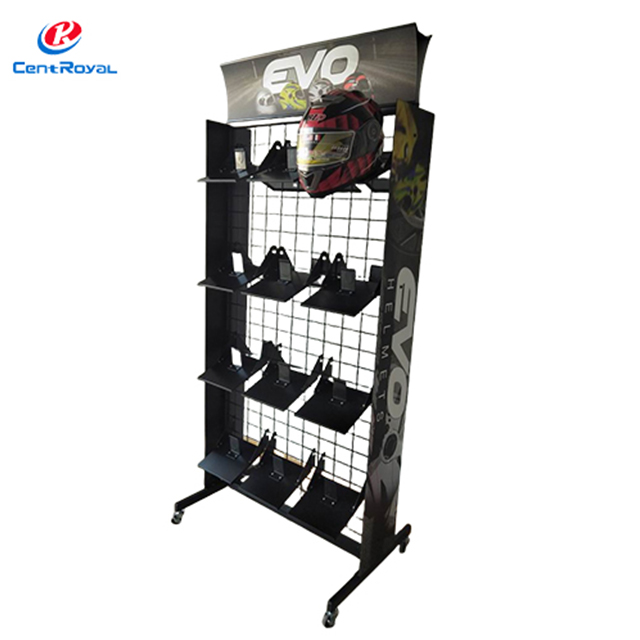
Consider the utility of a Branded rolling tiered metal display rack for heavy consumer packaged goods, beverage merchandising, or hardware tools. This approach emphasizes mobility, structural integrity, and the use of lockable casters to maintain stability while allowing for easy floor resets. Heavy-duty casters with polyurethane wheels ensure the display can be moved fully loaded without damaging the store's flooring.
Wood communicates craftsmanship and heritage. Medium-Density Fiberboard (MDF), veneer, marine-grade plywood, and solid wood applications work exceptionally well for luxury, apparel, cosmetics, or organic brands. These materials elevate the premium brand perception. When using MDF, it is vital to specify high-pressure laminates (HPL) or thermofoil finishes to protect the wood core from moisture and impact. Exposed MDF edges will swell and chip if subjected to floor cleaning fluids.
Deploying a Branded rolling wooden display stand in specialty grocery or boutique settings communicates natural quality while maintaining floor layout flexibility. Wood fixtures can be stained, painted, or laminated to match exact brand guidelines. Incorporating thick, 2mm or 3mm PVC edge-banding protects the vulnerable corners of wood shelves from chipping when products are repeatedly loaded and unloaded.
Modern aesthetics often rely on injection-molded plastics, PETG, and acrylics. These materials allow for complex geometric shapes, seamless product illumination, and high-gloss finishes. Acrylics are particularly effective for cosmetics and consumer electronics, where transparency and light diffusion are critical for product presentation. However, standard acrylic can be brittle. In high-traffic zones, specifying impact-modified acrylic or polycarbonate prevents shattering if the display is struck by a cart.
Combining a steel structural chassis with wood laminates and acrylic accents provides the optimal balance of durability, cost-efficiency, and visual appeal. The steel core ensures longevity and weight bearing, the wood elements provide warmth and premium texture, and the acrylic components allow for targeted lighting and clean product housing. This hybrid approach allows engineers to put the expensive materials only where the consumer interacts with them, while using cost-effective structural steel for the hidden load-bearing frame.
Material Category | Primary Application | Durability Profile | Key Manufacturing Considerations |
|---|---|---|---|
Powder-Coated Steel | Heavy CPG, Hardware, Beverages | Extreme impact and scratch resistance | Requires precise welding; heavy shipping weight |
Laminated MDF / Wood | Apparel, Luxury, Organic Goods | Moderate; vulnerable to moisture at edges | Must use thick PVC edge-banding and HPL |
Polycarbonate / PETG | Cosmetics, Electronics, Illuminated headers | High shatter resistance; prone to surface scratches | Requires specialized routing and polishing |
Mixed-Material (Hybrid) | Flagship brand displays, Endcaps | High; leverages steel core with premium cladding | Complex assembly; requires tight tolerances between materials |
Building a durable structure is only half the battle. The fixture must actively sell the product. Visual merchandising strategies transform a static shelf into an engaging brand experience. The layout, lighting, and graphic integration must work together to capture shopper attention within seconds.
Effective visual merchandising often employs the Rule of 3 to structure three-dimensional merchandise groupings. This principle guides the consumer’s eye through asymmetrical heights and tiered layers on permanent shelves. Grouping products in threes creates visual interest and prevents the display from looking like a standard, uninspired warehouse rack. When designing shelf heights, ensure the most profitable or high-margin items sit directly at eye level, typically between 48 and 60 inches from the floor.
Permanent structures require adaptable messaging. Designing high-impact, permanent structural graphics alongside swappable graphic channels ensures the display remains relevant. Utilize Silicone Edge Graphics (SEG) fabrics, magnetic graphics, and side header cards to refresh seasonal messaging without altering the core physical structure. SEG frames allow store associates to easily push a fabric graphic into an extruded aluminum channel, creating a seamless, tensioned image that looks premium but takes seconds to change.
Modern permanent retail displays go beyond holding boxes. Integrating physical product trial zones, digital screens, interactive product testers, and ambient LED lighting creates a memorable shopping experience. When adding these elements, you must address the logistics of power supply integration, wire routing, and strict compliance with retail electrical codes. All lighting and digital components must carry UL or CE certification. Wires must be hidden within the metal tubing or routed through dedicated wire management channels to prevent tampering and maintain a clean aesthetic.
Interactive elements require rigorous testing. If you include a push-button product demonstrator, that button will be pressed thousands of times a week. Specify industrial-grade switches and ensure the digital media players are solid-state with no moving parts to prevent failure in the field. A broken interactive display damages brand perception more than having no interactive display at all.
Before moving into mass production, every permanent fixture must be evaluated against strict structural and logistical dimensions. A beautiful display that violates retailer guidelines or costs too much to ship is a failed project.
Navigating big-box store guidelines requires precision. Retailers enforce maximum height restrictions, ADA-compliant aisle clearance, and strict tip-testing requirements. A display that maximizes product density while maintaining a compliant, stable footprint is essential for approval and long-term placement. For example, many retailers restrict freestanding floor displays to a maximum height of 54 to 60 inches to maintain store sightlines. Tip-testing often requires the display to remain stable when tilted at a 10-degree angle, fully loaded. To pass this, engineers must concentrate the weight at the base, often adding hidden steel ballast plates.
Product packaging changes, and seasonal SKUs rotate. Engineer your displays with adjustable pegboards, movable shelving, slot walls, and universal mounting brackets. This modularity allows the fixture to adapt to changing SKU configurations without requiring a completely new build. Using standard 1-inch on-center slotted uprights allows shelves to be moved up or down easily. Designing universal hook profiles ensures that blister packs of varying sizes can be accommodated.
Shipping logistics heavily influence design. The way a display is packed dictates a massive portion of the project budget.
Knock-Down (KD) Flat-Packed: These displays offer lower freight volumes and a reduced carbon footprint. You can fit significantly more units on a single truck. However, they carry a higher risk of store-level assembly failure if the instructions are poor or the parts are too complex.
Fully Assembled: These displays guarantee structural integrity and allow for immediate floor deployment. Store associates simply roll them off the pallet and stock the merchandise. The downside is they require maximum volume transit space, drastically increasing freight costs.
Semi-Assembled: A hybrid approach where the complex base and electrical components are pre-assembled at the factory, and the upper shelving is attached in the field using simple, tool-less connectors.
To ensure successful deployment, follow these critical steps during the evaluation phase:
Obtain the official vendor routing and compliance guide from the target retailer.
Conduct a physical tip-test using the actual product weight distribution.
Perform a drop-test on the shipping carton to ensure the packaging protects the fixture during transit.
Time a novice user assembling the KD version to identify confusing steps in the instruction manual.
Verify all electrical components have the required UL/CE holographic stickers visible for store inspectors.
The manufacturing strategy for permanent displays shifts dramatically based on the required volume. Understanding how scale impacts production methods is critical for budget management.
Manufacturing methods dictate project scale. Custom tooling for injection-molded plastics or proprietary metal extrusions requires high-volume rollouts, typically exceeding 500 units, to achieve economies of scale. The upfront cost of a steel injection mold is substantial, but it drives the per-unit cost down significantly at high volumes. Conversely, wood, MDF, and fabricated steel can be highly cost-effective at lower volumes, making them ideal for targeted rollouts of 50 to 100 units. CNC routing for wood and laser cutting for sheet metal require zero custom tooling, allowing for agile, low-volume production runs.
When planning a rollout, consider the lifecycle of the tooling. If you plan to order 200 units a year for five years, investing in injection molding tooling in year one makes strategic sense. If this is a one-time rollout of 150 units, stick to fabricated metal and vacuum-formed plastics to avoid heavy tooling amortization.
Deploying permanent fixtures across hundreds of retail locations introduces significant execution risks. Anticipating these failures and engineering mitigation strategies into the display design is what separates amateur rollouts from professional executions.
Complex fixtures often end up abandoned in backrooms because store associates cannot assemble them. Store personnel are busy and will not spend two hours deciphering a confusing manual. Mitigate this risk by mandating tool-less assembly design. Use wingnuts, snap-buttons, and keyhole slots instead of loose screws and Allen wrenches. Print color-coded visual guides, provide QR codes linking to rapid 60-second video instructions, or utilize third-party merchandising teams for white-glove installation.
Shopping cart collisions, floor cleaning fluids, and daily consumer interaction will degrade a display's premium aesthetic over time. The bottom six inches of any floor display take the most abuse. Incorporate heavy-duty metal kickplates at the base to deflect carts. Specify thick impact-resistant edge-banding on wood components, and utilize scratch-resistant plastics in high-touch areas. Elevate the base deck slightly off the floor using adjustable glide feet to prevent water damage from floor scrubbers.
Missing graphics, broken hooks, or dusty shelves destroy the trust the display was built to project. A permanent fixture that looks dilapidated harms the brand more than having no fixture at all. Establish a structured field maintenance schedule. Provide spare parts kits with initial shipments, including extra peg hooks, shelf clips, and graphic retainers. Utilize routine audits by field merchandising teams to ensure the unit remains in pristine condition throughout its lifecycle. Design the display with smooth, easy-to-wipe surfaces, avoiding deep crevices where dust and debris can accumulate.
Permanent retail displays are high-value strategic assets reserved for core product lines, predictable SKU lifecycles, and secured retail placements. They transform temporary brand presence into established store architecture. When engineered correctly, they withstand the brutal retail environment while consistently driving shopper engagement and product sales.
Conduct a comprehensive store footprint audit to verify exact dimensions and retailer compliance rules.
Design and build a physical prototype to test structural integrity, tip-resistance, and visual impact.
Run a limited-store pilot test for 30 to 60 days to analyze real-world performance and shopper interaction.
Refine the assembly instructions based on feedback from the pilot test before committing to a full production rollout.
A: Permanent retail displays are engineered to last between 1 and 5+ years. The actual lifespan depends heavily on the materials chosen, such as powder-coated steel or solid wood, and the level of daily wear and tear in high-traffic retail environments.
A: Brands utilize non-structural graphic channels, magnetic sheets, and Silicone Edge Graphics (SEG). These systems allow store associates to replace marketing graphics and seasonal messaging in minutes without needing tools or specialized training.
A: Semi-permanent displays utilize lightweight plastics, thin wire, or thick corrugated materials designed for 3 to 12 months of use. Permanent displays rely on heavy-duty structural steel, millwork wood, and injection-molded acrylics built for multi-year deployment.
A: Yes, many permanent fixtures incorporate heavy-duty, lockable caster wheels. This mobility allows retailers to easily optimize floor layouts during seasonal store resets without compromising the structural integrity of the display.
A: Modularity allows a single fixture to adapt to changing product sizes and seasonal merchandise. By using adjustable shelving, pegboards, and universal brackets, brands can update their planograms without manufacturing an entirely new display structure.