Please Choose Your Language
Views: 0 Author: Site Editor Publish Time: 2026-07-11 Origin: Site
The upfront capital expenditure required for custom retail fixtures demands a measurable return on investment. Material failure on the retail floor results in costly replacements, safety liabilities, and immediate brand damage. Brands must balance structural durability, aesthetic alignment, and budget constraints when designing fixtures intended to survive one to five years in high-traffic retail environments. Selecting the wrong substrate leads to sagging shelves, chipped finishes, or complete structural collapse under heavy product loads.
Evaluating the structural realities, logistical requirements, and merchandising applications of metal, acrylic, wood, and PVC dictates whether a fixture meets performance and profitability metrics. By understanding the inherent strengths and limitations of each material, retail merchandisers can engineer permanent retail displays that withstand daily consumer interaction while effectively communicating brand identity.
Metal provides maximum load-bearing capacity and longevity, making it the standard for heavy merchandise and high-traffic durability.
Acrylic delivers premium, glass-like transparency ideal for cosmetics and electronics, but requires strict scratch-mitigation protocols.
Wood communicates brand warmth and perceived luxury, though it introduces weight and environmental sensitivity considerations.
PVC balances cost-efficiency with high-quality printability, serving as a lightweight alternative for graphic-heavy, modular units.
Hybrid Designs often deliver the highest ROI by combining the structural integrity of metals with the aesthetic appeal of plastics or wood.
Contrasting temporary corrugated cardboard displays with permanent fixtures justifies the upfront capital expenditure through long-term durability and lower cost-per-day metrics. Temporary units are designed for seasonal promotions and typically degrade within weeks. Permanent fixtures must endure constant restocking, harsh store cleaning protocols, and daily physical interaction from consumers. Establishing a baseline survival rate of one to five years requires a fundamental shift in how structural integrity is calculated.
Calculating the weight-per-shelf ratio based on product density is essential to prevent bowing, structural failure, or safety hazards on the retail floor. A display holding power tools requires vastly different engineering than one holding lightweight cosmetics. You have to account for dynamic loads—consumers leaning on shelves, store associates dropping heavy boxes during restocking, and the vibration of floor buffers hitting the base.
Beyond pure structural requirements, material aesthetics must align with brand identity. An organic skincare line benefits from the natural warmth of wood, while a high-tech electronics brand leans toward sleek metal and acrylic. Balancing these visual requirements with allocated unit budgets is the core challenge of retail fixture design. You need to map out the exact dimensions, weight capacities, and visual goals before selecting a primary substrate.
Merchandise Category | Average Load Per Shelf (lbs) | Recommended Primary Material | Expected Lifespan |
|---|---|---|---|
Beverages & Canned Goods | 150 - 300 | Heavy-Gauge Steel | 3 - 5+ Years |
Power Tools & Hardware | 100 - 250 | Steel / Aluminum Hybrid | 3 - 5+ Years |
Cosmetics & Skincare | 20 - 50 | Acrylic / Glass | 1 - 3 Years |
Apparel & Lifestyle | 30 - 75 | Wood / MDF | 2 - 4 Years |
Snacks & Confections | 15 - 40 | Expanded PVC / Wire | 1 - 2 Years |
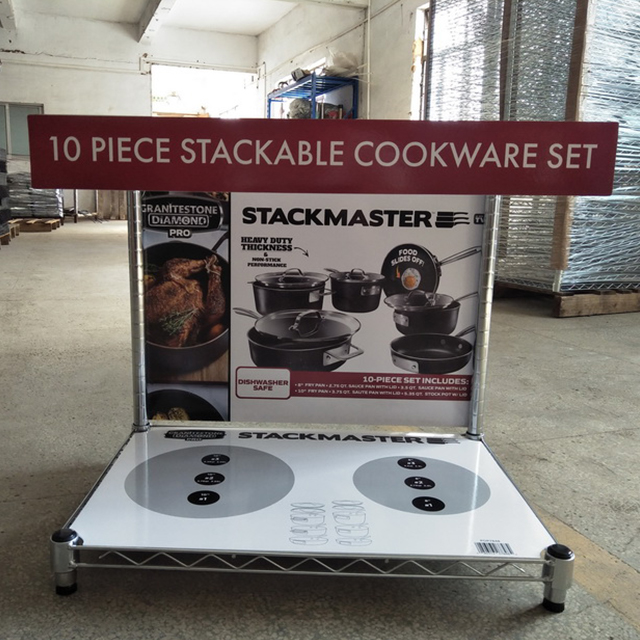
Steel, aluminum, and wire iron options provide unmatched impact resistance, structural rigidity, and maximum weight-bearing capacity. When engineering a Metal display stand, manufacturers utilize heavy-gauge steel for primary uprights and load-bearing shelves, ensuring the unit will not warp under the weight of heavy consumer packaged goods. Aluminum offers a lighter alternative for secondary components, resisting corrosion while reducing overall freight weight.
Metal stands out as the ultimate multi-year investment because it resists bending, chipping, and structural fatigue in high-impact zones. Retail aisles are chaotic environments where shopping carts and floor buffers frequently collide with endcaps and freestanding units. Metal fixtures absorb these impacts without sustaining catastrophic damage. This makes them ideal for heavy beverages, automotive parts, power tools, and high-traffic aisle merchandising.
Fabrication techniques for metal fixtures involve laser cutting, CNC bending, and robotic welding to ensure precise tolerances. MIG and TIG welding create seamless joints that withstand immense shear forces. Once the raw structure is built, surface finishing becomes the next priority. Powder coating is the industry standard, baking a dry powder onto the metal surface to create a hard, scratch-resistant shell that outlasts traditional wet paint.
Despite its strength, metal introduces specific implementation risks. High upfront tooling costs and heavy shipping weights impact initial rollout logistics. To mitigate these challenges, engineers utilize flat-pack designs that allow the unit to be shipped broken down and assembled on-site using standard hardware like cam locks or machine screws. Applying premium powder coatings expands aesthetic variety, moving beyond a purely industrial look to match specific brand colors and textures.
Specify steel gauge based on actual product weight, defaulting to 16-gauge or 18-gauge for heavy loads.
Require powder coating rather than liquid paint to prevent chipping from shopping cart impacts.
Design modular shelving brackets that allow store associates to adjust heights without tools.
Incorporate leveling feet to account for uneven retail floors and prevent wobbling.
Acrylic achieves premium transparency, edge-lighting capabilities, and seamless integration with LED components to draw consumer attention. It provides the high-end look of real glass but with significantly reduced shipping weight and zero shattering hazards. In a retail environment, safety is paramount. Glass shelves or cases that shatter pose severe liability risks, making acrylic the preferred choice for secure but highly visible merchandising.
Specialized fabrication techniques such as thermoforming, laser cutting, and flame polishing allow for complex, customized product housings. Designers bend acrylic into seamless curves or polish the edges to capture and refract internal LED lighting. These characteristics make acrylic ideal for cosmetics, consumer electronics, jewelry, and premium small-format goods where optical clarity is necessary to showcase intricate product details.
When specifying acrylic, thickness is a primary consideration. Standard 1/8-inch (3mm) acrylic works for small dividers or graphic holders, but load-bearing shelves require 1/4-inch (6mm) or even 3/8-inch (10mm) material to prevent bowing. Cast acrylic is generally preferred over extruded acrylic for high-end displays because it machines cleaner and offers superior optical clarity without the internal stress lines common in extruded sheets.
Acrylic is susceptible to scratching, micro-fractures under stress, and clouding from harsh commercial cleaning chemicals. To mitigate these risks, brands specify scratch-resistant coatings and utilize thicker gauge acrylic for any load-bearing areas. Providing store-level cleaning and maintenance guidelines ensures that store associates do not use ammonia-based cleaners that permanently fog the material.
Wood communicates organic authenticity and high-end craftsmanship to elevate perceived product value. The material variations range from solid hardwoods and sustainable bamboo to engineered woods like MDF and plywood finished with laminates or veneers. Solid hardwoods offer unmatched durability and a premium feel but add significant weight and cost. Engineered woods provide a stable, consistent substrate that resists the natural bowing often seen in solid timber.
The aesthetic impact of wood makes it highly effective for apparel, organic foods, luxury goods, wine and spirits, and lifestyle brand merchandising. It creates a welcoming, tactile environment that contrasts sharply with the sterile feel of standard metal shelving. Consumers subconsciously associate wood grains with quality, heritage, and natural ingredients.
In commercial fixture manufacturing, Medium Density Fiberboard (MDF) is the workhorse. It machines perfectly on CNC routers without splintering and provides a dead-flat surface for applying high-pressure laminates (HPL) or melamine. Edge banding machines apply durable PVC or wood veneer strips to the exposed edges, creating the illusion of a solid block of wood while keeping weight and costs manageable.
Implementation risks include moisture warping, inconsistent grain finishes, susceptibility to splintering, and heavy freight weight. Utilizing high-quality edge-banded MDF ensures consistency across hundreds of units while reducing overall weight. Applying commercial-grade, moisture-resistant sealants protects the fixture from humidity fluctuations and routine floor mopping in the retail space.
Expanded PVC offers a lighter, highly versatile alternative to acrylic while maintaining structural stability for semi-permanent to permanent use. A PVC display stand leverages a smooth, uniform surface optimized for high-resolution direct-to-substrate flatbed UV printing. This eliminates the need for secondary vinyl wraps, reducing manufacturing steps and preventing the peeling or bubbling that occurs with applied graphics over time.
The ease of CNC routing, V-cutting, and cold bending allows manufacturers to create highly customized structural shapes and dimensional signage without expensive injection molding. PVC is best utilized for graphic-heavy displays, modular units, endcap headers, sidekicks, and retail environments requiring frequent visual updates. Its lightweight nature makes store-level assembly straightforward for retail associates.
When engineering with expanded PVC, material density matters. Standard sheets come in various thicknesses, typically ranging from 3mm to 19mm. For structural side panels or base components, 12mm or 19mm PVC provides adequate rigidity. However, because PVC is a thermoplastic, it lacks the tensile strength of wood or metal. Long horizontal spans will sag under their own weight, let alone the weight of merchandise, unless reinforced with hidden metal channels or designed with shorter shelf spans.
Risks associated with PVC include a lower perceived luxury value compared to wood or metal, limited load-bearing capacity for heavy items, and susceptibility to thermal expansion in non-climate-controlled environments. To mitigate these issues, PVC should primarily be used for structural housing, non-load-bearing side panels, or signage areas rather than primary load-bearing shelves.
Engineering metal frames for structural integrity while using wood shelving for aesthetic warmth or acrylic showcases for high-visibility product security delivers the highest overall value. Strategic combinations allow brands to leverage the specific strengths of each material while masking their weaknesses. A heavy-duty steel frame ensures the fixture survives retail floor impacts, while bamboo shelves communicate an organic brand message.
Combining the strength of metal with the vivid graphics of PVC creates engaging, multi-sensory retail environments. These hybrid designs enhance the consumer experience by providing tactile variety and visual depth. A display might feature an illuminated acrylic header, a powder-coated steel chassis, and interchangeable PVC graphic side panels.
Balancing the elevated perceived value and optimized performance of mixed materials requires managing increased manufacturing complexity. Multi-vendor coordination and extended assembly times must be factored into the project timeline. Designing standardized connection points between different materials ensures that the final unit remains easy to assemble on the store floor.
Use steel tubing for the hidden internal skeleton to handle all weight-bearing duties.
Clad the exterior in lightweight MDF or PVC to achieve the desired visual aesthetic without adding unnecessary structural weight.
Incorporate clear acrylic only where product visibility or security lockboxes are strictly required.
Design graphic channels that allow store staff to slide in new PVC header cards without tools.
Assessing the initial engineering costs associated with metal fabrication molds versus plastic extrusion, CNC routing, or custom woodworking is critical for nationwide rollouts. Prototyping allows engineers to test structural integrity and refine connection points before mass production begins. The ability to knock down or flat-pack a display drastically alters logistics, warehousing requirements, and in-store setup times. Fully assembled units consume massive amounts of trailer space, driving up freight costs exponentially.
Material weight directly impacts shipping logistics. Replacing solid wood with edge-banded MDF or swapping steel side panels for printed PVC reduces freight weight by hundreds of pounds per pallet. You must calculate the dimensional weight versus actual weight to optimize pallet configurations. Designing a fixture that fits within standard pallet dimensions (48x40 inches) prevents costly overhang fees from freight carriers.
End-of-life compliance and sustainability mandates are increasingly shaping material selection. Evaluating material recyclability and understanding specific retailer disposal policies ensures that fixtures do not become a liability at the end of their operational lifecycle. Steel and aluminum are highly recyclable and often generate scrap value. Plastics and mixed-material units require clear disassembly instructions so store personnel can separate components into appropriate recycling streams.
Define exact product weights and dimensions to establish baseline load-bearing requirements before selecting primary structural materials.
Request physical material samples and finish swatches to verify aesthetic alignment under actual retail fluorescent lighting conditions.
Calculate flat-pack freight estimates early in the design phase to optimize pallet space and avoid unexpected logistical bottlenecks.
Initiate the prototyping phase with a specialized manufacturer to test structural integrity and assembly times on a live retail floor.
A: Permanent retail displays are engineered to last between one and five years on the retail floor. Their actual lifespan depends heavily on the materials used, the volume of daily consumer interaction, and the harshness of routine store cleaning and restocking protocols.
A: A metal stand utilizing heavy-gauge steel supports hundreds of pounds per shelf, making it ideal for beverages or hardware. A PVC stand is lightweight and designed for lighter merchandise, as heavy loads cause the plastic substrate to bow or fail over time.
A: PVC is generally superior for custom printed displays. Expanded PVC offers a smooth, opaque surface highly receptive to direct flatbed UV printing. Acrylic is primarily used when transparency, edge-lighting, or a glass-like premium finish is required.
A: Wire metal and expanded PVC are among the most cost-effective materials for long-term use. Wire offers high strength with minimal material usage, while PVC provides a lightweight, easily machinable surface that reduces both manufacturing and shipping expenses.
A: Denser materials like solid wood and heavy-gauge steel significantly increase freight weight and shipping costs. Utilizing lightweight alternatives like aluminum, hollow-core MDF, or PVC, combined with flat-pack engineering, maximizes trailer space and reduces overall logistics expenses.
A: Yes, hybrid displays are highly effective. A common approach uses a steel frame for structural integrity, wood shelving for brand warmth, and acrylic accents for product visibility, maximizing both durability and aesthetic appeal.
A: Acrylic provides the same premium optical clarity as glass but is significantly lighter and highly shatter-resistant. This eliminates the safety liabilities associated with broken glass on the retail floor, though acrylic requires specific cleaning protocols to prevent scratching.