Please Choose Your Language
Views: 0 Author: Site Editor Publish Time: 2026-07-12 Origin: Site
Retail merchandisers often face a frustrating binary trap on the sales floor. You can choose flimsy, short-lived temporary shippers that fall apart after a few weeks. Alternatively, you can invest in highly expensive, inflexible permanent fixtures that drain your marketing budget. Neither option perfectly suits modern retail cycles. Retailer compliance demands are strict, and floor space is highly contested. Most product campaigns run for three to nine months. These campaigns easily outlast temporary corrugated materials. However, they simply do not justify permanent capital expenditures.
Brands need a strategic middle ground. They need solutions engineered to withstand continuous restocking and heavy foot traffic. At the same time, these units must maintain cost-efficiency and supply chain agility. This is exactly where semi-permanent displays enter the picture. They bridge the gap between fleeting promotions and permanent store fixtures. You get the durability required for mid-length campaigns without the staggering upfront investment.
Lifespan & ROI: Semi-permanent displays typically last 3 to 12 months, offering a lower cost-per-impression than permanent fixtures and a longer functional life than temporary units.
Material Agility: They utilize hybrid construction (e.g., reinforced corrugate, plastics, light metals) to balance durability with manageable freight costs.
Retailer Compliance: Designed to meet strict big-box retailer requirements for footprint, safety, and aesthetic integration without requiring long-term floor space commitments.
Sustainability: They offer superior end-of-life recyclability compared to permanent mixed-material fixtures, especially when utilizing engineered cardboard structures.
Understanding the retail display landscape requires defining the extremes. Temporary and permanent units serve vastly different purposes. Both have distinct limitations and specific manufacturing cost profiles that impact your overall marketing strategy.
Temporary units dominate fast-moving consumer goods. Brands use them for seasonal pulses and rapid-turn product launches. They are made of standard, light-duty corrugate. These units are generally not designed for restocking. They are prone to aesthetic degradation, tearing, and moisture damage from store cleaning equipment. Store staff typically discard or recycle them once they are half-empty.
The manufacturing cost profile relies on low-cost tooling. You benefit from rapid die-cutting and inexpensive litho-lamination. However, the cumulative costs become highly repetitive. Replacing them frequently drains marketing budgets over time. When you factor in the labor required to assemble and stock these units multiple times a quarter, the hidden costs add up quickly.
Permanent fixtures cater to brand-owned store-within-a-store concepts. They hold year-round evergreen products. You often see them housing high-value consumer electronics or premium cosmetics. These units require high upfront manufacturing and tooling costs. They involve injection molding, steel fabrication, and heavy-duty acrylics. They suffer from heavy shipping weights and complex professional installation. They offer complete inflexibility if product packaging size or branding changes.
Their manufacturing cost profile demands high capital expenditure amortization. You need long-term product-line stability. Only then can you achieve true efficiency in the long run. If a retailer decides to change their floor plan, moving these heavy fixtures requires specialized labor and equipment.
These units operate comfortably for 3 to 12 months on the retail floor. The core differentiator lies in their construction. They are engineered using hybrid materials. This allows for multiple restocking cycles and seasonal graphic updates. You avoid the obsolescence risk of permanent units. You also escape the rapid wear-and-tear associated with temporary ones.
Field merchandisers appreciate the balance these units strike. They are sturdy enough to survive the chaotic retail environment but light enough to be repositioned without a forklift. This adaptability makes them a favorite among store managers who need to optimize their floor layouts frequently.
Brands are rapidly changing their retail merchandising strategies. The shift toward hybrid solutions is driven by clear operational advantages. Financial flexibility and retailer preferences play major roles in this transition.
Compare the cumulative cost of replacing temporary units. Buying, shipping, and setting up temporary displays four to five times a year adds up quickly. Freight and setup labor consume massive budgets. Deploying a single, highly durable unit is much more efficient. It shifts the budget from strict capital expenditure to agile operational marketing budgets. This avoids multi-level corporate approval bottlenecks.
By investing slightly more upfront in a durable unit, brands reduce their overall logistics footprint. Fewer shipments mean lower freight costs and less warehouse handling. This streamlined approach directly improves the return on investment for mid-length campaigns.
Permanent fixtures carry a massive obsolescence risk. They become useless due to product line extensions. Packaging size redesigns or seasonal rebranding can render them obsolete overnight. Hybrid units allow brands to refresh their physical marketing assets. You can update graphics and headers without facing massive write-offs.
When a new flavor or variant launches, you simply swap out the graphic panels. The core structure remains intact on the sales floor. This modularity keeps the brand presentation fresh and relevant without the need for entirely new fixtures.
Retail category managers are highly protective of floor space. They are hesitant to commit to multi-year permanent fixtures. However, they demand a premium aesthetic over sagging corrugated bins. Mid-length solutions appeal directly to these managers. They offer a premium look without locking down real estate indefinitely.
Presenting a well-engineered hybrid unit during buyer meetings often tips the scales. It demonstrates a commitment to quality and store aesthetics while respecting the retailer's need for seasonal flexibility.
Heavy merchandise requires serious structural integrity. Beverages, pet food, and consumer hardware demand strong support. Temporary displays cannot safely support these items over continuous restocking cycles. Hybrid units provide the necessary load-bearing strength. They keep heavy products secure and visually appealing.
Reinforced shelves prevent the dreaded "sag" that plagues standard corrugated displays. This structural integrity ensures that the product is always presented in the best possible light, maintaining brand equity throughout the campaign.
The strength of these mid-length displays comes from smart engineering. Designers mix materials to achieve specific structural goals. This ensures longevity without unnecessary weight.
Engineers use strategic placement of various materials. They combine laminated high-test corrugate with vacuum-formed plastics. Wire shelving and medium-density fiberboard reinforce high-stress zones. This hybrid approach targets load-bearing areas specifically. It keeps the overall unit lightweight but incredibly strong.
For example, a display might feature a heavy-duty MDF base to resist mop water and shopping cart impacts, while the upper shelving utilizes reinforced corrugated board to keep the unit's center of gravity low and manageable.
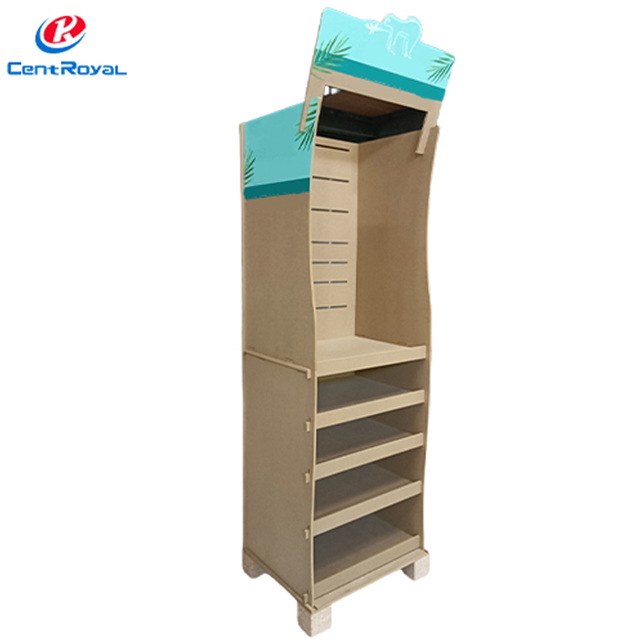
Sustainability is a major focus in modern retail design. The engineering behind an Eco themed multi-tier cardboard display showcases this perfectly. High-grade, moisture-resistant, double-wall corrugated board can mimic the structural integrity of wood or plastic. Designers utilize techniques like plastic-free structural joinery. They use soy-based inks to keep the display fully recyclable at the store level.
By eliminating mixed-material bonding, these units can be easily broken down and placed directly into the store's cardboard baler. This end-of-life simplicity is a massive selling point for eco-conscious retailers.
Adaptability extends the life of retail fixtures significantly. A well-designed Cardboard tiered themed display rack can be engineered with interchangeable headers. It features clip-on graphic side panels and adjustable shelving heights. Brands can send lightweight graphic refresh packs to stores. This transitions a single rack from back-to-school themes directly into winter holiday campaigns seamlessly.
This modular approach allows field teams to update the display in minutes. It maximizes the initial structural investment while keeping the marketing message aligned with the current retail season.
Selecting the right fixture requires a systematic approach. You must evaluate your campaign duration, product velocity, and overall budget impact.
Match your display type to inventory turnover rates. Consider seasonal shelf-life and expected time-on-floor carefully.
Display Type | Expected Time-on-Floor | Ideal Product Velocity | Best Use Case |
|---|---|---|---|
Temporary | 2 - 4 Weeks | High (Rapid Turn) | Seasonal pulses, quick promotions |
Semi-Permanent | 3 - 12 Months | Medium to High | Mid-length campaigns, heavy items |
Permanent | 1 - 5 Years | Steady (Evergreen) | Brand-owned store sections, cosmetics |
Evaluate your packaging physical footprint. Determine if it is locked in for the next twelve months. If product redesigns are scheduled soon, steer away from permanent tooling. Mid-length options provide the flexibility needed for evolving product lines.
Adjustable shelving and modular inserts allow you to accommodate new bottle shapes or box sizes without scrapping the entire display structure.
Analyze the overall budget impact thoroughly. Include manufacturing setup, tooling, and dimensional weight shipping costs. Factor in warehousing expenses. Compare flat-packed, knock-down units against pre-assembled, heavy permanent fixtures. Flat-packed options drastically reduce shipping costs and freight damage rates.
Shipping air is expensive. Designing units that pack flat but assemble into rigid structures on-site is a critical cost-saving measure for national rollouts.
Assess your product's price point carefully. Premium products demand a high-tactile look. Temporary units cannot project this quality. However, margins or product lifecycles may not support permanent fixtures. Hybrid solutions deliver the required premium aesthetic efficiently.
Using high-gloss laminates, spot UV coatings, and textured finishes on reinforced corrugate can elevate the perceived value of the display to match the premium nature of the product.
Deploying retail fixtures involves inherent risks at the store level. Anticipating these challenges ensures successful campaign execution.
Complex retail assembly often leads to failure. Store staff might discard the display or build it incorrectly. Mitigate this by designing for tool-less assembly. Use smart-lock tabs and provide pre-loaded shippers where possible. Utilize 3D-visual instruction sheets with QR codes linking directly to assembly videos.
If a display takes more than ten minutes to assemble, compliance rates drop significantly. Keep the engineering smart but the assembly process incredibly simple.
Displays suffer base damage from shopping carts. Floor scrubbers and wet mopping degrade materials quickly. Mitigate this by incorporating recessed plastic mop trays. Use reinforced base structures and protective scuff-resistant laminates. Elevated kick plates also prevent significant bottom-edge damage.
Protecting the base is the most critical factor in extending the life of a floor display. A compromised base will lead to the entire unit being pulled from the floor.
Retailers often reject non-compliant, mixed-material waste. Landfill penalties occur when materials cannot be easily separated. Mitigate this by designing for fast, tool-free material separation. Slide-out metal shelf supports from cardboard slots ensure full compliance with retailer-specific recycling mandates.
Clear labeling on the display components guiding store staff on how to properly recycle the unit ensures a smooth exit strategy at the end of the campaign.
Hybrid retail fixtures are the most versatile tool for mid-length retail campaigns. They offer the aesthetic and structural benefits of permanent fixtures. They achieve this at a fraction of the cost, risk, and setup time. Brands gain flexibility, durability, and better retail compliance.
Assess your planned campaign length to confirm it falls between 3 and 12 months before committing to a design.
Calculate your restocking frequency and total product weight per shelf to determine the necessary material strength.
Evaluate your freight and assembly costs against the life expectancy of the unit to ensure budget alignment.
Audit your current retail display spend to identify areas where hybrid units can consolidate costs.
Request physical material prototypes to test structural integrity and assembly time before full production.
A: They typically last 3 to 12 months on the sales floor, depending on foot traffic, restocking frequency, and the specific hybrid materials used in their construction.
A: Semi-permanent options carry a 2x to 4x higher upfront unit cost due to material reinforcement, but they eliminate the recurring costs of buying, shipping, and setting up 4 to 5 temporary displays over the same period.
A: Yes, through structural reinforcement techniques such as metal support brackets, wire frames, heavy-duty MDF bases, and double-wall fluted corrugated board.
A: Yes, particularly when designed as an eco themed multi-tier cardboard display. By using high-strength, recyclable corrugated boards and ensuring non-cardboard structural elements are easily detachable, they avoid the landfill waste common with mixed-material permanent fixtures.
A: No. Unlike permanent retail fixtures that require specialized field assembly teams, most semi-permanent models are designed for quick, tool-less assembly by on-site store staff or brand merchandisers.