Please Choose Your Language
Views: 0 Author: Site Editor Publish Time: 2026-07-07 Origin: Site
The rising cost of retail floor space and the diminishing returns of continuously replacing temporary, corrugated campaigns present a significant operational challenge for retail brands. Maintaining a dedicated, clutter-free presence on the sales floor is increasingly difficult when relying on short-term materials. Brands often lose visibility to competitors due to the short lifecycle, physical degradation, and high disposal rates of temporary fixtures. Transitioning from tactical merchandising to permanent displays shifts in-store marketing from a recurring operational expense to a multi-year, brand-building asset. This strategic pivot carves out a permanent home on the sales floor, ensuring products remain accessible, organized, and visually prominent. By investing in durable infrastructure, brands secure prime real estate, reduce the logistical burden of constant campaign changeovers, and establish a consistent physical touchpoint that shoppers can reliably locate trip after trip.
Permanent fixtures are engineered for a 3-to-5-year lifecycle, fundamentally altering the ROI calculation by amortizing upfront costs over long-term deployment.
Material selection dictates structural integrity, aesthetic alignment, and retailer compliance, requiring a balance between durability and visual merchandising goals.
Successful deployment hinges on navigating strict retailer footprint guidelines, weight capacities, and modularity requirements for future product iterations.
Retail merchandising requires a clear distinction between temporary executions and long-term infrastructure. Temporary displays serve promotional, seasonal, or impulse-driven goals. They are built for short bursts of attention, typically lasting four to six weeks before structural failure or retailer disposal. In contrast, permanent fixtures focus on brand-building, core SKU presentation, and category definition. Establishing a 3-to-5-year lifecycle expectation impacts capital expenditure planning versus operating expense budgets. Brands must identify the threshold where the continuous replacement of temporary displays exceeds the upfront investment of a permanent fixture.
These robust structures act as foundational store décor. They separate products from competitive shelf clutter and secure prime real estate on the retail floor. When a brand installs a permanent fixture, they are essentially negotiating a long-term lease for that specific square footage. This requires a shift in mindset from campaign-based thinking to architectural planning. The fixture must withstand thousands of shopper interactions, routine floor cleaning, and restocking cycles without losing its visual appeal or structural integrity.
Merchandising Strategy | Primary Objective | Expected Lifespan | Material Composition | Best Use Case |
|---|---|---|---|---|
Temporary / Promotional | Drive impulse buys and seasonal volume | 4 to 8 weeks | Corrugated cardboard, light plastics | Holiday campaigns, new flavor launches |
Semi-Permanent | Bridge the gap between seasons | 3 to 6 months | Heavy-duty corrugated, styrene, wire | Quarterly promotions, secondary placements |
Permanent Infrastructure | Establish category dominance and brand equity | 3 to 5 years | Steel, aluminum, solid wood, acrylic | Core product lines, high-value merchandise |
Securing a dedicated, negotiated footprint away from main shelf clutter is the first step toward long-term visibility. Prime locations include end caps, freestanding floor zones, and power aisles. Brands must establish baseline metrics for success, which include sustained sales lift, reduced stock-outs, and improved long-term brand recall. Furthermore, ensuring adaptability is critical. The core structure must accommodate future planogram changes, packaging updates, and seasonal graphic swap-outs without requiring a complete replacement.
To achieve these metrics, the design phase must incorporate rigorous field testing. A fixture that looks excellent in a design studio may fail miserably under the harsh lighting and heavy traffic of a big-box retailer. Success criteria should also include ease of restocking for store associates. If a display is difficult to load, store staff will likely abandon it, leading to empty shelves and lost sales. The fixture must facilitate a first-in, first-out (FIFO) inventory flow naturally, minimizing the labor required to maintain a fully stocked appearance.
High-traffic environments such as grocery stores, hardware outlets, and automotive shops demand robust engineering. A Metal display stand provides the necessary durability for heavy merchandise like beverages, power tools, and automotive fluids. The functional benefits include maximum load-bearing capacity, resistance to shopping cart impacts, and long-term structural stability. When engineering these units, cold-rolled steel is frequently utilized for the primary chassis, offering superior tensile strength compared to lighter alloys.
However, brands must weigh trade-offs such as higher shipping weights and potential susceptibility to scratching or rusting if the metal is not properly finished. A high-quality powder coating is mandatory for these environments. Unlike standard liquid paint, powder coating is baked onto the metal, creating a hard, protective shell that resists chipping and corrosion. For environments with high moisture, such as garden centers or outdoor automotive aisles, zinc-plated undercoatings provide an additional layer of defense against rust.
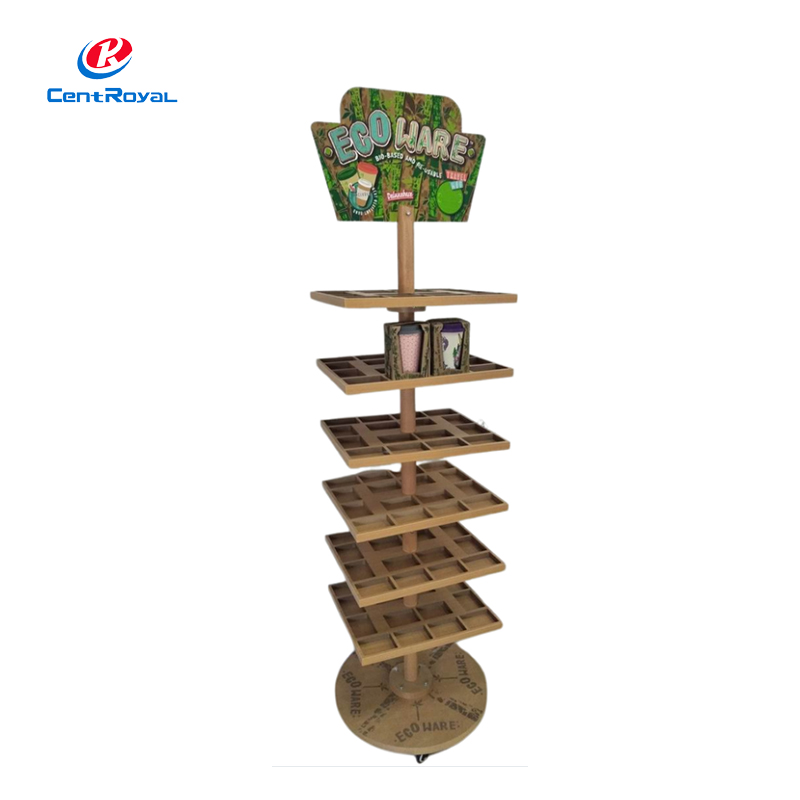
Environments requiring a warm, organic, or premium aesthetic benefit from specialized fixtures. Cosmetics, boutique apparel, and specialty foods are ideal use cases for a Wooden rotating multi-tier display rack. This configuration maximizes SKU density within a minimal footprint. It encourages shopper engagement through tactile rotation and 360-degree product visibility. The tactile nature of wood communicates quality and craftsmanship, aligning perfectly with premium brand positioning.
The trade-offs involve susceptibility to wear, chipping, or moisture damage in uncontrolled environments. Precise mechanical engineering is required to ensure smooth rotation under a full product load. Heavy-duty steel ball bearings, often sealed to prevent dust ingress, must be integrated into the base. The weight distribution across the tiers must be perfectly balanced to prevent the unit from leaning or binding during rotation. Hardwoods or high-density MDF with commercial-grade laminates are preferred over softwoods to resist dents from shopping carts or vacuum cleaners.
Combining materials offers a balanced approach to structural integrity and aesthetic appeal. Integrating a metal chassis with acrylic shelving, wood accents, or vacuum-formed plastics delivers cost-efficiency alongside premium finishes. Modular constructions allow brands to integrate interchangeable graphic channels, magnetic panels, or digital screens. This flexibility ensures the branding can be refreshed seasonally while retaining the permanent base structure.
A common hybrid approach involves a welded steel frame hidden behind vacuum-formed plastic shrouds. This provides the load-bearing capacity of metal with the complex, branded shapes achievable only through plastic molding. Clear acrylic is frequently used for shelving lips or product dividers, offering high visibility while keeping merchandise secure. When utilizing acrylic, specifying impact-resistant polycarbonate or thick-gauge cast acrylic prevents the cracking and yellowing often seen in cheaper extruded plastics over a multi-year deployment.
Strategic form factors dictate how shoppers interact with the merchandise. The physical shape and placement of the fixture must align with the specific retail environment and the shopper's journey.
Permanent End Cap Displays: Maximizing high-traffic exposure at the ends of store aisles. These require heavy-duty framing to tie into the retailer's existing gondola uprights safely.
Freestanding Floor Fixtures: Creating self-contained brand destinations in high-visibility walk pathways. These must be stable enough to stand alone without anchoring to a wall.
Heavy-Duty Dump Bins: Executing bulk merchandising strategies using permanent, structurally reinforced frames instead of disposable cardboard alternatives. These are ideal for irregularly shaped items or clearance merchandise.
Inline Shelf Systems: Customizing the standard retailer shelf with branded trays, pushers, and lighting to carve out a dedicated brand block within the main aisle.
Navigating big-box versus specialty store guidelines requires strict adherence to height limits, aisle clearance, and ADA (Americans with Disabilities Act) compliance. Evaluating specifications for end-cap integration versus freestanding floor displays is necessary for approval. Brands must understand retailer requirements for floor-cleaning clearance, often requiring kickplates, and safety mandates such as tip-over prevention mechanisms.
ADA compliance is a non-negotiable factor in modern retail design. Aisles must maintain a minimum clearance, typically 36 inches, which dictates the maximum depth of any freestanding fixture. Furthermore, the reach range for products must accommodate shoppers in wheelchairs, meaning critical merchandise should not be placed too high or too low. Retailers also enforce strict "line of sight" rules, capping the maximum height of floor displays (often around 54 to 60 inches) to ensure store security cameras and staff have an unobstructed view of the sales floor.
Analyzing the freight cost and damage risk of Knock-Down (KD) flat-packing versus fully assembled shipping impacts the rollout strategy. In-store assembly processes must minimize reliance on specialized merchandising labor. Engineering tool-less assembly or providing foolproof, visually driven instructions ensures accurate execution at the store level.
Shipping fully assembled units guarantees structural integrity but drastically increases freight volume, leading to higher transportation costs. Conversely, KD shipping maximizes trailer space but introduces the risk of improper assembly at the store. To mitigate this, engineers utilize interlocking metal tabs, pre-installed captive fasteners, and snap-fit plastic components. If tools are required, they should be included in the hardware kit, and the fastener types should be standardized so the assembler only needs one tool for the entire process.
Optimizing sightlines, reachability, and product placement based on average shopper ergonomics drives engagement. Visual merchandising design relies on deploying strategic focal points, clear signage placement, and organized product presentation. Brands must also evaluate the necessity and logistical complexity of integrating in-store power access for lighting elements or digital interactive screens.
Lighting integration requires careful planning. LED halo lighting or backlit headers draw attention, but they require proximity to a floor or ceiling outlet. Battery-powered LED systems are an alternative, but they introduce the maintenance burden of battery replacement. If hardwired power is used, the fixture must include UL-listed components and integrated cable management to prevent tripping hazards. The visual hierarchy of the display should guide the shopper's eye from the main brand header down to the specific product categories, utilizing color blocking and clear typography.
Extended prototyping phases and delays in manufacturing timelines present significant risks to deployment schedules. Building a 12-to-16-week buffer into rollout schedules mitigates these delays. Requiring physical prototypes for weight-testing and structural integrity validation before mass production prevents costly manufacturing errors.
During the prototyping phase, the fixture must undergo rigorous drop testing and transit simulation. Packaging engineering is just as critical as the fixture design itself. A beautifully crafted display is useless if it arrives at the store with bent metal or shattered acrylic. Utilizing ISTA (International Safe Transit Association) testing standards ensures the packaging can withstand the vibrations, impacts, and compression forces of the modern freight network.
Displays left unassembled in backrooms, damaged during setup, or placed in non-compliant zones by store staff undermine the investment. Utilizing dedicated third-party installation teams ensures proper placement. Pre-packing hardware in blister packs and requiring photographic proof of compliance upon installation guarantees the fixture is executed as designed.
Relying on store associates to assemble complex permanent fixtures is a high-risk strategy. Retail staff are focused on customer service and general restocking, not specialized merchandising construction. Contracting a professional installation network ensures the units are built correctly, placed in the negotiated footprint, and loaded with the correct planogram. The installation team can also remove and recycle the packaging materials, leaving a clean, finished presentation on the sales floor.
Audit your current retail footprints to identify high-traffic zones suitable for long-term installations.
Request structural prototypes from display manufacturers to validate weight capacities and material durability under real-world conditions.
Establish a comprehensive maintenance and graphic refresh schedule to protect the lifespan of the fixture.
Secure written approval for footprint dimensions and safety compliance from retail partners prior to mass production.
A: A well-engineered permanent fixture typically lasts between 3 to 5 years on the retail floor. The actual lifespan depends on the materials used, the store environment, and adherence to regular maintenance protocols.
A: Temporary displays are usually made of corrugated cardboard for short-term promotions lasting a few weeks. Permanent fixtures use durable materials like metal, wood, or heavy-duty plastics, designed to hold core SKUs for years.
A: Powder-coated steel and heavy-duty aluminum offer the highest durability for high-traffic areas. These metals resist shopping cart impacts, bear heavy product loads, and maintain structural integrity over time.
A: Request the specific vendor routing and fixture guidelines from your retail partner before the design phase. Ensure the design adheres to their strict height limits, ADA aisle clearances, and safety requirements like tip-over prevention.
A: Knocked down shipping reduces freight volume and transit damage risk but requires store-level assembly. Fully assembled shipping guarantees structural integrity and immediate deployment upon arrival but requires more trailer space.
A: Yes. Modular permanent fixtures feature interchangeable graphic channels, magnetic panels, and adjustable shelving. This allows brands to swap out visuals and reconfigure product layouts without replacing the main structural frame.