Please Choose Your Language
Views: 0 Author: Site Editor Publish Time: 2026-07-06 Origin: Site
Modern retail floor plans require constant adaptation to keep up with seasonal inventory shifts and temporary brand activations. Store managers face a persistent challenge: balancing premium visual merchandising with the mechanical need for rapid, modular layout changes. Static, heavy glass fixtures severely limit this agility. They require specialized handling, pallet jacks, and extra labor hours, remaining highly prone to shattering during overnight store resets. On the other end of the spectrum, traditional metal mobile racks often corrode, scratch easily, and project a utilitarian warehouse aesthetic that actively degrades brand perception in high-end retail environments.
Commercial-grade acrylic offers the optimal hybrid solution for dynamic spaces. Combining optical clarity, a glossy premium finish, and heavy-duty mobility allows brands to maintain high-end aesthetics while adapting to high-traffic environments. By utilizing an integrated approach with modular components, retail teams can execute floor changes in minutes rather than hours. This ensures floor spaces remain flexible, visually striking, and perfectly aligned with the sophisticated look that modern consumers expect from premium brands.
Agility Meets Aesthetics: Mobile acrylic displays provide the premium look of glass with a fraction of the weight, enabling rapid store reconfiguration without specialized labor.
Durability and Long-Term ROI: Commercial-grade acrylic offers superior impact resistance compared to glass and zero risk of rust or corrosion compared to metal, reducing long-term replacement costs.
Organized Customer Interaction: Integrating modular elements like acrylic risers, integrated signage, and a rotating multi-tier display stand optimizes space, organizes inventory, and enhances customer browsing.
Ecosystem Integration: Mobile floor units can be seamlessly paired with modular add-ons, such as a rotating multi-tier display stand or an LED lit acrylic desktop display, to create a cohesive brand experience.
Procurement Focus: Long-term scalability and ROI depend heavily on technical specifications, specifically caster load ratings, acrylic thickness, glossy finish retention, and scratch-resistant coatings.
Retail operations run on tight timelines and strict labor budgets. Seasonal inventory shifts, flash sales, and temporary pop-up activations require fixtures that adapt instantly to new merchandise profiles. Store layouts cannot remain static if brands want to maximize customer engagement and direct foot traffic effectively. Operational demands dictate that fixtures must support rapid merchandising changes without compromising structural integrity or visual appeal. When a new product line drops, the floor team needs to clear space, roll in new displays, and restock within a single overnight shift. Fixtures that require tools, specialized moving equipment, or third-party contractors fail to meet the success criteria of modern, agile retail.
Furthermore, the physical environment of a pop-up shop or a mall kiosk presents unique challenges. These spaces often feature uneven flooring, limited square footage, and high exposure to foot traffic from all angles. Displays must be freestanding, stable, and visually appealing from 360 degrees. The success of a retail activation heavily depends on how quickly the space can be built out and broken down. Modular environments allow brands to test different layouts, measure customer interaction, and optimize the floor plan on the fly based on real-time sales data.
Traditional glass and heavy wood millwork carry significant hidden operational costs. Moving these fixtures requires specialized labor, heavy-duty suction cups for glass, and protective padding to prevent damage to the store environment. Breakage risks during transport remain exceptionally high, leading to unexpected replacement expenses and dangerous safety hazards on the sales floor. A single shattered glass display can derail an entire product launch, requiring hours of cleanup and leaving a massive gap in the visual merchandising strategy.
Beyond the physical risks, the inability to quickly reposition heavy units prevents store managers from capitalizing on changing foot traffic patterns throughout the day or week. If a specific aisle becomes a bottleneck, static fixtures cannot be easily shifted to relieve the congestion. Wood millwork, while premium in appearance, chips and dents over time, requiring expensive touch-ups or complete replacement. The sheer weight of these materials also drives up freight shipping costs when deploying fixtures to new store locations or temporary pop-up events.
Integrating an acrylic mobile casters display stand allows brands to scale their physical footprint efficiently and cost-effectively. Easy transit and rapid setup drastically lower the barrier to entry for temporary pop-up locations, trade shows, and seasonal mall kiosks. Retailers can deploy these units across multiple venues, ensuring brand consistency while minimizing logistical headaches. The lightweight nature of acrylic combined with smooth-rolling casters means a single employee can unload, position, and stock the display without requesting backup.
This flexibility extends to the warehouse and storage phases of retail operations. When not in use, mobile acrylic stands can be rolled into backrooms or storage units easily. Their modular nature often allows them to nest or break down into smaller footprints, saving valuable square footage. For brands looking to expand their physical presence rapidly, standardizing on mobile acrylic fixtures ensures that new store build-outs can be executed in days rather than weeks, providing a massive competitive advantage in the fast-paced retail sector.
High-gauge acrylic, specifically polymethyl methacrylate (PMMA), delivers exceptional light transmission, often reaching up to 92%. This optical clarity rivals or even exceeds standard silica glass, which can sometimes carry a slight green tint at the edges. The primary trade-off involves durability versus surface maintenance. Acrylic offers vastly higher impact resistance—often rated at 10 to 17 times more shatter-resistant than standard glass of the same thickness. It also boasts a significantly lower weight profile, making it the ideal candidate for mobile applications.
However, acrylic requires specific maintenance protocols to prevent micro-scratches over time. While glass resists scratching from abrasive materials, standard acrylic can show wear if wiped with dry, rough cloths or exposed to harsh chemical solvents. Retailers must weigh the massive benefits of shatter resistance, reduced shipping weight, and optical brilliance against the need for proper cleaning training. For high-traffic environments where carts, bags, and heavy footfall are constant, the shatterproof nature of acrylic far outweighs the surface maintenance requirements.
A high-gloss, glass-like finish directly elevates brand perception on the sales floor. Premium acrylic signals quality and modernity to the consumer. This aesthetic advantage increases the perceived value of high-margin merchandise housed within or upon the fixture. Cosmetics, fine jewelry, smart devices, and luxury accessories benefit immensely from the pristine, reflective surface that high-grade acrylic provides. The material catches ambient store lighting, creating a halo effect around the products that draws the customer's eye.
Unlike painted metal or laminate wood, the color and gloss of premium acrylic are inherent to the material itself. Scratches can often be buffed out, and the edges can be flame-polished to a brilliant, diamond-like shine. This level of finish is practically impossible to achieve with standard metal racks, which rely on powder coating that can chip and peel over time. The seamless, transparent nature of acrylic also ensures that the fixture does not visually compete with the merchandise; instead, it acts as an invisible pedestal that highlights the product's best features.
Acrylic outperforms metal mobile racks in high-traffic, humid, or outdoor-adjacent pop-up environments. Metal fixtures inevitably succumb to rust and corrosion when exposed to moisture, spilled beverages, or the high humidity often found in coastal retail locations or open-air markets. Once a metal rack begins to rust, it immediately degrades the brand's image, making the merchandise look cheap and neglected. Acrylic offers complete resistance to moisture degradation and oxidation.
Furthermore, acrylic does not react to the salts and oils left behind by human hands, a common issue with brass or untreated steel fixtures in high-touch retail zones. It maintains its structural integrity and visual appeal regardless of environmental fluctuations. For brands operating in diverse climates or deploying fixtures to semi-outdoor pop-up villages, acrylic provides peace of mind. The material will not warp, swell, or rot like wood, nor will it corrode like metal, ensuring a long, visually consistent lifespan across all deployment locations.
Mobility transforms daily retail operations from a rigid chore into a fluid, responsive strategy. Smooth-gliding, non-marring polyurethane casters protect expensive retail flooring, such as polished concrete, hardwood, or luxury vinyl tile. They allow a single employee to reposition entire merchandise displays effortlessly, without needing to empty the shelves first. This mechanical benefit ensures that store layouts remain fluid and responsive to daily operational needs, such as clearing aisles for special events or shifting high-margin goods to the front of the store during peak hours.
The integration of high-quality casters also facilitates easier floor cleaning and maintenance. Janitorial staff can simply unlock the wheels, roll the display aside, clean the floor beneath it, and roll it back into exact position. This eliminates the dust bunnies and debris buildup that typically plague static shelving units. Operational agility means that the physical store environment can act as a dynamic tool for the sales team, rather than a static obstacle they have to work around.
Maximizing SKU density without creating a cluttered, overwhelming visual experience requires smart vertical integration. Incorporating a Rotating multi-tier display stand within or atop mobile units achieves this goal perfectly. This configuration keeps a massive amount of inventory accessible within a minimal footprint. Customers can stand in one place and browse extensive product lines simply by spinning the tiers, preventing aisle congestion and improving the overall shopping experience.
Space optimization is critical in high-rent retail districts where every square foot must generate revenue. By utilizing a mobile base with rotating vertical tiers, retailers can display hundreds of small items—such as cosmetics, phone accessories, or blind-box toys—in an area that would normally only hold a fraction of that inventory on standard flat shelving. The clear acrylic construction ensures that even products on the lower or inner tiers remain visible, as light passes through the structure to illuminate the entire merchandise array.
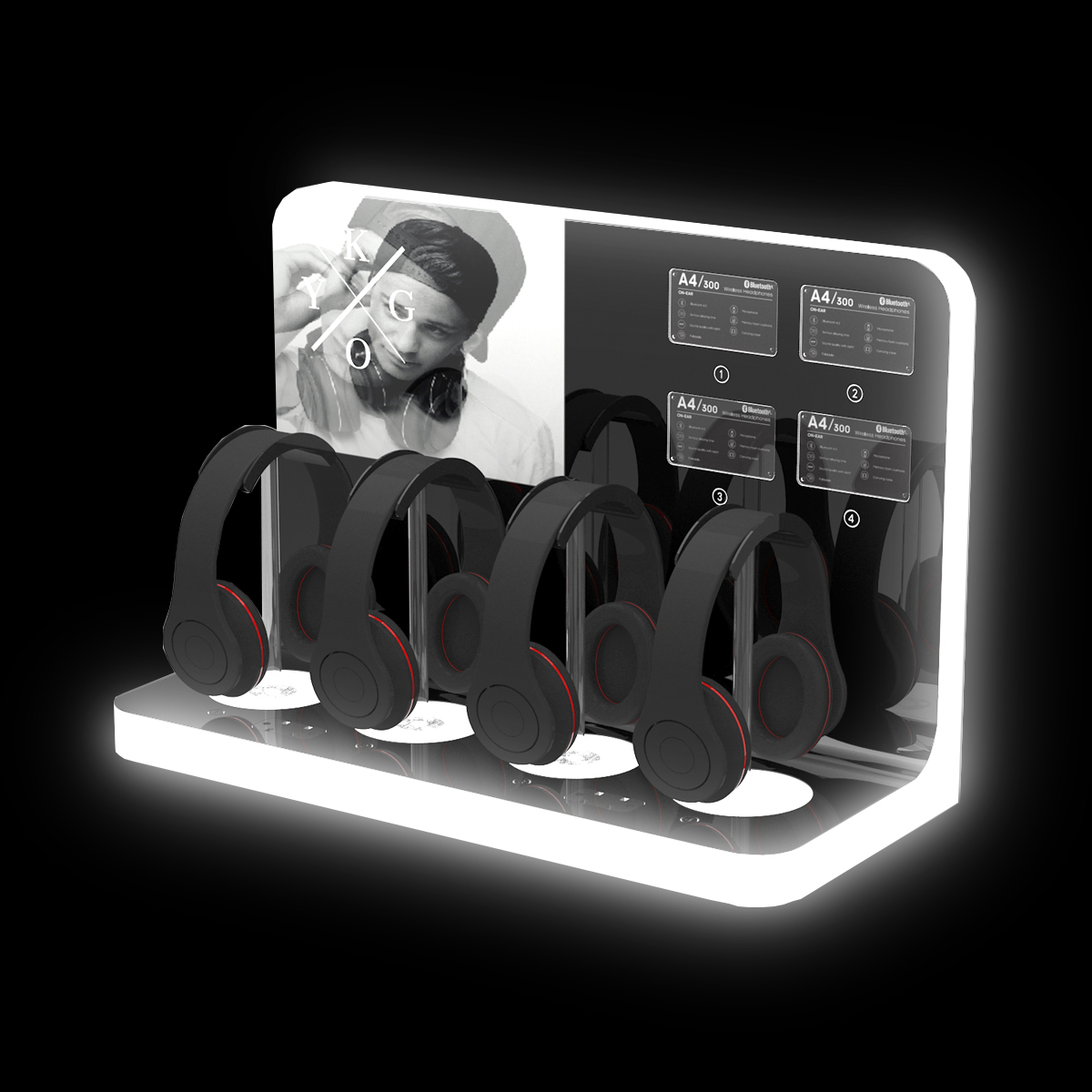
Strategic lighting draws the eye, especially in low-light pop-up environments, boutique settings, or department store corners. Pairing mobile floor stands with an LED lit acrylic desktop display creates an immediate focal point. Integrated lighting signals premium product value and highlights intricate details on flagship merchandise. When a customer sees a product illuminated from below or behind through frosted acrylic, it elevates the item from a simple commodity to a coveted luxury good.
Lighting integration in acrylic displays can be customized to match brand colors or create specific moods. Edge-lit acrylic panels, where LEDs are hidden in the base and illuminate engraved logos or text, provide sophisticated branding without the need for bulky light boxes. When these lit elements are placed on a mobile cart, the entire unit becomes a glowing beacon that can be positioned strategically near store entrances or high-traffic intersections to capture impulse buyers and drive engagement with new product launches.
Cluttered, disorganized shelves confuse shoppers and lead to walk-outs. Adding tiered acrylic risers and integrated slot-in signage helps categorize merchandise logically and visually breaks up flat displays. These modular additions guide customer interaction and streamline self-directed browsing. Clear signage ensures product features, pricing, and branding remain front and center, allowing the customer to educate themselves without needing immediate assistance from a sales associate.
Acrylic risers create a stadium-seating effect for products, ensuring that items placed at the back of a shelf are just as visible as those at the front. This is particularly effective for footwear, boxed cosmetics, or packaged electronics. Signage holders built directly into the mobile display structure prevent paper signs from curling, tearing, or looking unprofessional. By keeping the browsing experience organized and visually appealing, retailers can significantly increase dwell time and conversion rates.
High-shrinkage and high-touch environments demand robust loss prevention strategies that do not alienate the honest shopper. Mobile acrylic display cases equipped with cam locks, heavy-duty hinges, and tamper-evident seals secure valuable items while maintaining 360-degree visibility. Dust-proof seals protect delicate merchandise, such as electronics, scale models, or high-end cosmetics, from environmental contaminants. These enclosed units balance high-visibility product exposure with necessary security measures.
The advantage of an enclosed acrylic mobile unit over a glass one is safety. If a theft attempt occurs and the unit is knocked over, acrylic will not shatter into thousands of dangerous shards. Furthermore, the lighter weight of acrylic allows for thicker, more robust panels to be used without making the entire unit too heavy to roll. Retailers can confidently display high-value goods in the center of the floor, knowing they are protected by impact-resistant materials and secure locking mechanisms.
Hardware dictates the lifespan and safety of mobile units. Cheap plastic wheels fail under heavy loads, flat-spot over time, and permanently damage hardwood or vinyl floors. Differentiate your procurement by specifying commercial-grade, locking swivel casters with steel housings and precision ball bearings. Calculate the required load capacity based on the maximum anticipated product weight, plus the weight of the acrylic structure itself, before finalizing any order.
Caster Material | Floor Protection | Load Capacity | Best Retail Use Case |
|---|---|---|---|
Standard Hard Plastic | Poor (Scratches easily) | Low (Under 50 lbs) | Lightweight countertop spinners only |
Polyurethane (PU) | Excellent (Non-marring) | High (150+ lbs per caster) | Heavy-duty mobile floor stands, hardwood floors |
Thermoplastic Rubber (TPR) | Good (Shock absorbing) | Medium (100 lbs per caster) | Outdoor-adjacent pop-ups, uneven tile |
Steel/Cast Iron | Terrible (Will destroy floors) | Extreme (500+ lbs) | Warehouse storage, not for retail floors |
Material thickness directly impacts structural integrity and visual appeal. Load-bearing shelves require at least 1/2-inch (12mm) or 3/4-inch (19mm) acrylic to prevent bowing under the weight of merchandise. Lighter components, like signage holders, can utilize 1/4-inch (6mm) stock. Inspect the fabrication details closely. Flame-polished edges and seamless chemical solvent bonding indicate superior manufacturing. Avoid units held together entirely by visible screws, cheap glues, or silicone, as these will loosen and degrade under the stress of constant movement.
Structural design impacts logistics, freight costs, and setup times for pop-up brands. Flat-pack modular acrylic stands reduce shipping costs significantly and take up less space in storage. However, fully welded or chemically bonded units offer greater rigidity and durability under repeated use. Evaluate setup times and the frequency of transport when choosing between modular and pre-assembled designs.
Check the hardware: Ensure all screws and cam locks in flat-pack designs thread into metal inserts, not directly into the acrylic, to prevent stripping.
Test the rigidity: Fully assembled units should not rack or twist when pushed from the top corner.
Evaluate the packaging: Ensure the manufacturer uses custom-cut foam and protective film to prevent transit damage.
Review the instructions: Modular units must come with clear, visual assembly guides that require minimal tools.
Acrylic remains susceptible to surface scratching despite its high impact resistance. Acknowledge this reality during the store planning phase. Specify displays with factory-applied anti-scratch hard coatings for high-touch zones, such as countertops or the top shelves of mobile units. This proactive step extends the visual lifespan of the fixture significantly. Additionally, design the display so that high-wear components, like top plates or base kickplates, can be easily swapped out without replacing the entire unit.
Train staff to handle merchandise carefully around the displays. Avoid dragging heavy boxes or metal-edged products across the acrylic surfaces. Implementing a regular inspection schedule allows store managers to identify and buff out minor micro-scratches using specialized acrylic polishing compounds before they become deep, unsightly gouges that ruin the premium aesthetic.
Improper maintenance ruins acrylic faster than physical abuse. Ammonia-based glass cleaners, abrasive scouring pads, and standard paper towels cause chemical crazing—a network of microscopic cracks—leading to irreversible clouding and structural weakening. Outline strict cleaning protocols for all retail staff and janitorial teams. Mandate the use of clean, tag-less microfiber cloths and specialized acrylic polishes exclusively.
Store managers should remove all unauthorized cleaning chemicals from the floor to prevent accidental use. A simple solution of warm water and mild dish soap is often sufficient for daily dust removal. By controlling the cleaning process, brands can ensure their acrylic fixtures maintain their glass-like clarity and premium gloss for years, maximizing the return on investment.
Top-heavy displays pose a severe tipping risk during movement, especially when rolling over thresholds, carpet transitions, or uneven tile. Address this hazard by designing units with a low center of gravity. Utilize weighted bases or thicker acrylic stock at the bottom to anchor the display. Always specify dual-locking casters—which lock both the wheel rotation and the swivel bearing—to ensure strict compliance with retail safety standards once the unit is parked.
When moving a fully loaded display, staff should be trained to push from the lowest possible point rather than pulling from the top. If a display is particularly tall, consider adding a wider wheelbase or outrigger legs to increase the footprint and prevent lateral tipping. Safety must always dictate the final design of any mobile retail fixture.
The acrylic mobile casters display stand stands as the most pragmatic and visually striking choice for modern retailers. It seamlessly merges high-end visual merchandising with essential operational flexibility. Brands can adapt layouts instantly, respond to foot traffic patterns, and execute overnight resets while maintaining a premium aesthetic that engages customers and protects valuable merchandise.
When shortlisting vendors, prioritize transparency and engineering expertise. Demand clear specifications regarding acrylic sourcing, caster bearing quality, and the availability of scratch-resistant coatings. A slightly higher initial investment in commercial-grade materials and superior fabrication yields a significantly longer lifespan, fewer safety hazards, and better overall returns on your visual merchandising budget.
Audit your current floor plan to identify static, heavy fixtures that hinder rapid merchandising changes and create bottlenecks.
Calculate the maximum load capacities required for your heaviest product categories to ensure you specify the correct acrylic thickness and caster ratings.
Request physical material samples and hardware prototypes from display manufacturers to verify caster smoothness, edge polishing, and acrylic clarity.
Establish and document a strict, ammonia-free cleaning protocol, ensuring all store staff have access to dedicated microfiber cloths and acrylic polish.
A: Capacity depends heavily on acrylic thickness and the specific caster rating. Commercial units typically range from 50 to 200+ lbs. Always verify the manufacturer's load-bearing specifications for both the shelves and the steel-housed casters before placing heavy merchandise.
A: Yes, for mobile applications. Acrylic offers a lighter weight and superior shatter resistance compared to glass. It also provides a glossy aesthetic and complete resistance to rust and corrosion, which metal racks cannot guarantee in fluctuating environments.
A: Never use paper towels or ammonia-based glass cleaners. Ammonia causes chemical crazing and clouding. Use only clean microfiber cloths and dedicated acrylic cleaners or a mild soap and water solution to maintain optical clarity and prevent micro-scratches.
A: Yes. Modular designs allow rotating tiers to be securely mounted to mobile acrylic pedestals. This integration creates high-density merchandising solutions, maximizing SKU visibility while retaining the ability to move the entire unit effortlessly.
A: Both options exist. Battery-operated units offer cleaner lines and eliminate trip hazards, making them ideal for temporary pop-ups. Plug-in models provide consistent, high-output brightness better suited for permanent retail installations.
A: Yes, through smart design solutions. Manufacturers can incorporate recessed slots, non-slip silicone feet, or integrated magnetic locking systems directly into the mobile acrylic display shelves to keep modular add-ons secure during transit.
A: Yes. Dual-locking casters are mandatory for retail environments. These specialized casters lock both the wheel rotation and the swivel mechanism, ensuring total floor safety and stability once the display is positioned.