Please Choose Your Language
Views: 0 Author: Site Editor Publish Time: 2026-08-24 Origin: Site
Specifying fixture finishes is never merely a cosmetic choice. It acts as a critical operational investment driving retail brand perception and defining the fixture lifecycle. Shabby displays immediately signal poor quality to shoppers. Standard liquid paint often chips, peels, and fades under daily store operations. Powder coating solves these issues by applying electrostatically charged particles cured under extreme heat. This advanced process establishes the modern baseline for commercial durability, offering superior hardness and adhesion.
However, all powder coats are not equal. Selecting the precise powder-coat chemistry remains essential. The right formulation prevents premature chipping. It also stops chalking or rusting under heavy retail use. In this guide, you will learn how to match specific chemistries to your exact store environment. We will also examine quality control standards and implementation risks so you can confidently protect your fixtures.
Polyester vs. Epoxy: Polyester finishes offer the best UV resistance for outdoor or window-facing displays, while epoxy provides superior abrasion resistance for strictly indoor environments.
Pre-treatment is Non-Negotiable: Even the highest-grade powder coat will fail without proper substrate preparation and priming (e.g., zinc-rich primers).
Texture Matters: Textured or matte finishes on a Metal Grid Rack hide fingerprints and minor scratches better than high-gloss alternatives.
Chipped or rusted fixtures immediately downgrade the perceived value of your merchandise. Shoppers naturally associate the quality of the retail environment with the quality of the products sold within it. A high-end apparel display loses its premium appeal if the metal base shows visible rust spots or flaking paint. This visual degradation damages brand trust. It also forces store managers to pull units from the floor, disrupting visual merchandising strategies.
Retail environments introduce constant physical and chemical stressors. A standard fixture faces relentless shopping cart impacts on the sales floor. Daily product friction wears down surfaces. Staff members frequently use harsh cleaning chemicals that degrade weak clear coats. Seasonal humidity introduces moisture that attacks exposed steel. Without a robust protective layer, these standard wear-and-tear events quickly destroy raw metal substrates.
You must define clear success criteria when specifying a finish. A truly successful finish achieves zero flaking under normal use. It maintains strict color fidelity over five or more years. It also requires minimal routine maintenance from store associates. Hitting these targets ensures your fixtures remain active and attractive on the sales floor.
Engineers formulate powder coatings using distinct chemical resins. Each chemistry provides specific performance attributes. Understanding these differences allows you to specify the optimal finish for your Metal Display Stand.
Epoxy represents the workhorse of indoor durability. These coatings deliver maximum hardness. They provide excellent chemical and corrosion resistance, making them highly resilient against industrial cleaners. However, epoxy carries notable limitations. It has poor UV stability. The surface will rapidly chalk and fade when exposed to direct sunlight. Therefore, you should strictly reserve epoxy finishes for indoor applications away from large windows.
Polyester coatings dominate the retail fixture industry. They offer exceptional UV resistance and weatherability. The cross-linked structure remains flexible enough to resist chipping from heavy physical impacts. Manufacturers commonly use TGIC (triglycidyl isocyanurate) or TGIC-free variants depending on regional environmental regulations. Polyester serves as the best use case for general-purpose indoor and outdoor stands. It performs brilliantly for window displays and seasonal merchandising units.
Polyurethane powder coatings deliver a highly refined aesthetic. They offer outstanding flow during the curing process. This creates a smooth, premium surface that closely mimics high-end liquid paint. Polyurethane also boasts high resistance to retail cleaning agents and finger oils. You should specify this chemistry for luxury retail fixtures requiring a flawless, upscale appearance.
Fluoropolymer coatings represent the pinnacle of exterior protection. They provide extreme weatherability and unmatched color retention over decades. However, they come with a significant limitation: high cost. Procurement teams generally only justify fluoropolymers for permanent, high-exposure outdoor architectural stands.
Powder-Coating Chemistry Comparison Chart
Chemistry Type | Primary Strength | Main Limitation | Best Retail Use Case |
|---|---|---|---|
Epoxy | Maximum hardness and chemical resistance | Chalks and fades under UV exposure | Strictly indoor fixtures away from windows |
Polyester | Exceptional UV resistance and flexibility | Slightly lower chemical resistance than epoxy | General-purpose indoor/outdoor displays |
Polyurethane | Smooth flow for a premium, liquid-like aesthetic | Can be more brittle under severe impacts | High-end luxury retail fixtures |
Fluoropolymer | Extreme weatherability and color retention | Cost-prohibitive for standard fixtures | Permanent outdoor architectural structures |
You cannot specify a finish in a vacuum. The specific retail environment dictates the necessary physical and chemical properties of the coating.
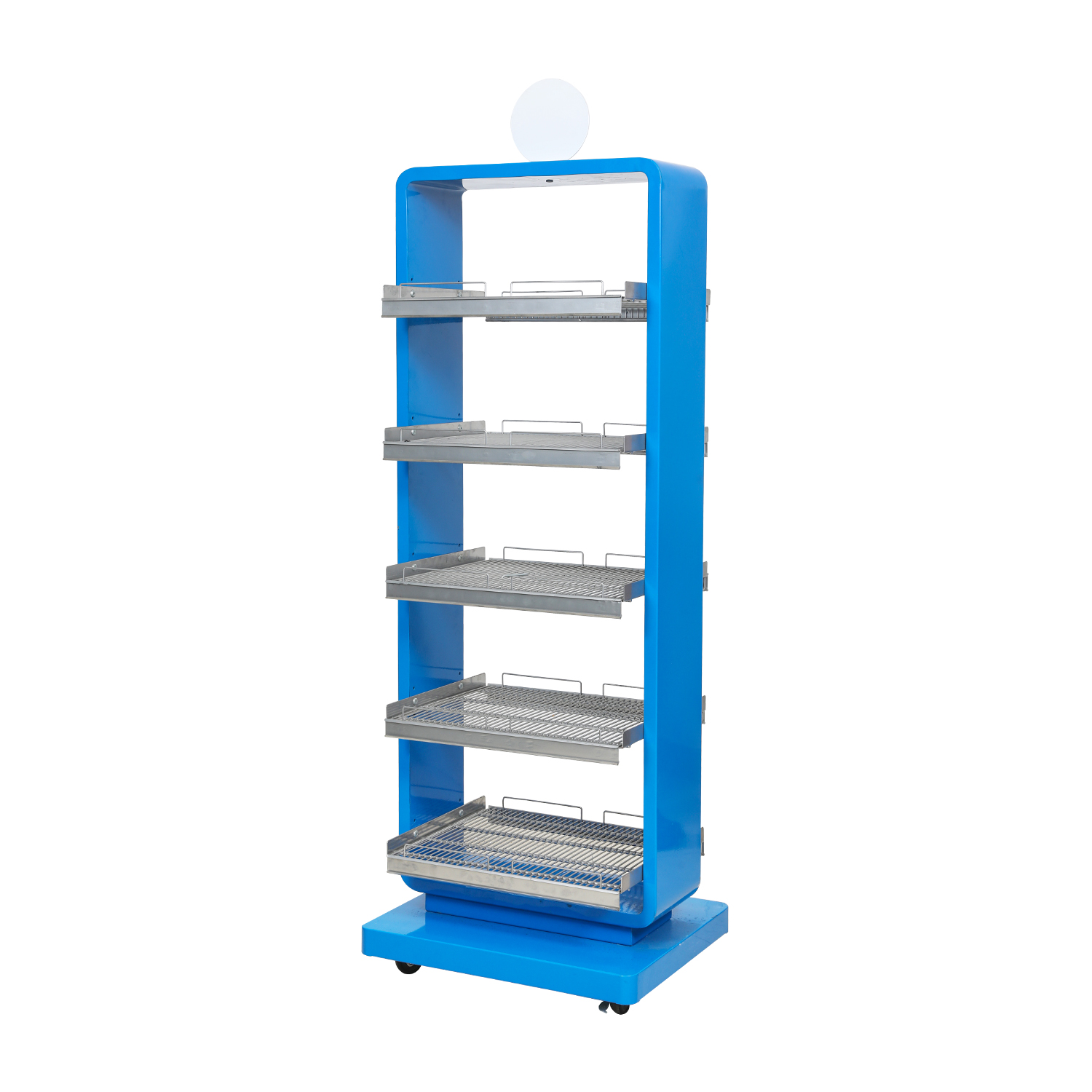
High-traffic store zones demand finishes with exceptional abrasion resistance. Shoppers constantly interact with certain fixtures. High-friction items like a Metal Grid Rack endure endless abuse. Metal hangers slide across the bars. Staff members aggressively reposition heavy products. These scenarios require a coating with high cross-link density, such as polyurethane or a reinforced epoxy blend. High cross-link density prevents the surface from wearing down to bare metal.
Outdoor furniture or sidewalk displays face severe environmental threats. You must assess local UV indexes before selecting a coating. Intense sunlight rapidly degrades inferior resins. Furthermore, you must address the impact of coastal humidity and salt spray. Coastal environments accelerate oxidation on steel substrates. These harsh locations require a specialized dual-coat approach. A zinc-rich primer must sit below a highly durable polyester topcoat to block moisture penetration.
Your aesthetic choices directly impact daily maintenance burdens for store staff. Consider the gloss level carefully. High-gloss finishes look striking, but they highlight every substrate imperfection and fingerprint. Matte finishes elegantly conceal these minor flaws. Texture also plays a vital role. Smooth surfaces show fine scratches easily. Sand or vein textures reduce visible wear. Choosing a textured finish lowers daily wiping and polishing requirements for your floor team.
Specifying the right chemistry only solves half the problem. Poor manufacturing execution will ruin even the best coating formulation. You must monitor quality control to ensure lasting protection.
Industry experts know a stark reality: 80% of coating failures stem from poor cleaning and substrate preparation. Powder coat cannot adhere to oily, dusty, or oxidized metal. Facilities must employ rigorous pre-treatment protocols. They should utilize sandblasting for heavy scale removal. Chemical treatments remain equally critical. Phosphating or zirconium washes create a microscopic texture on the metal. This texture gives the powder coat something to grip permanently.
Many buyers incorrectly assume a single coat provides adequate protection. You must mandate a zinc-rich base coat for high-risk items. Zinc acts as a sacrificial anode. If a scratch penetrates the topcoat, the zinc oxidizes before the steel substrate rusts. This step proves essential for steel stands facing outdoor moisture or frequent floor mopping.
Coating thickness dictates performance. Engineers measure dry film thickness (DFT) in mils (thousandths of an inch). You must define the acceptable DFT range in your specifications. The standard range typically falls between 2 to 3 mils. Over-application creates significant problems. A coating exceeding 4 mils often becomes brittle and flakes upon impact. Conversely, under-application fails to cover the metal profile. This thinness allows moisture to penetrate and initiate rust.
Curing transforms the dry powder into a solid plastic shell. The metal substrate must reach a specific temperature for a precise duration. Low-budget vendors often rush this process to increase production volume. This under-curing severely compromises the cross-linking process. The resulting finish looks acceptable initially but suffers from early peeling and terrible impact resistance. Always verify vendor curing capabilities.
Procuring durable fixtures requires active vetting of manufacturing partners. You need vendors who view finishing as an exact science rather than an afterthought.
Use a clear checklist to align your needs before approaching vendors. Following a matrix prevents costly specification errors.
Identify the primary location: Is the fixture strictly indoors, or will it face outdoor elements?
Assess the interaction level: Will it hold heavy, abrasive items or soft goods?
Select the chemistry: Match indoor/high-traffic needs with Epoxy. Match outdoor/high-sun needs with Polyester.
Determine the texture: Choose matte or textured finishes to minimize staff cleaning time.
Do not accept vague assurances about quality. Demand technical transparency from your partners. Ask these specific questions during the vetting process:
"What is your standard pre-treatment wash process?" Listen for multi-stage chemical washes or abrasive blasting. Reject vendors who only use manual solvent wiping.
"Do you run salt-spray and cross-hatch adhesion tests?" Reputable vendors regularly test their batches using ASTM standards. Cross-hatch testing proves the coating actually bonded to the metal.
"How do you monitor oven temperatures?" Vendors should use data loggers to ensure large metal parts reach the necessary core temperature for full curing.
Never roll out a full store package based on a color swatch alone. Advise your buyers to request sample coupons. These coupons must use the exact metal substrate, primer, and topcoat specified. Test these samples in your actual retail environment. Scratch them, hit them with a shopping cart, and wipe them with your standard store cleaners. Real-world testing validates your specification before major capital deployment.
Protecting your retail fixtures requires a deliberate, technical approach to surface finishes. The chemistry of the powder coating must align perfectly with the fixture’s physical environment and daily usage. Epoxy excels inside, while polyester dominates exterior spaces. Furthermore, impeccable pre-treatment and strict thickness controls remain non-negotiable for long-lasting adhesion.
Encourage your procurement teams to look far beyond simple color swatches. Demand technical transparency and rigorous testing from your manufacturing partners. By matching the right chemistry to the right environment, you preserve store aesthetics, reduce frustrating maintenance burdens, and maximize the operational lifespan of your display investments.
A: Use mild soap and warm water with a soft microfiber cloth. Gently wipe the surface to remove dust and finger oils. You must avoid abrasive scrubbers, harsh chemical solvents, or high-pressure washers. These aggressive methods easily scratch the surface and dull the protective clear coat, reducing the fixture's long-term visual appeal.
A: Store staff can mask minor surface scratches using color-matched touch-up paint, typically acrylic or polyurethane pens. However, this is only a cosmetic fix. If the scratch exposes and compromises the base metal, you cannot re-powder-coat it in-store. The fixture must be sent back to an industrial facility for proper sandblasting and recoating.
A: The initial application cost of powder coating is often similar or slightly higher than standard liquid paint. However, its long-term value is significantly higher. Powder coating delivers superior impact resistance and durability. This extended lifespan reduces the need for frequent maintenance and delays costly fixture replacement cycles.